Category: Content Marketing

  • Content Localization Strategy: How Cocacola Targets Customers In Every Continent

    Content Localization Strategy: How Cocacola Targets Customers In Every Continent

    How does it feel to have millions of customers in over 200 countries?

    Coca-Cola is one of the few companies that understand this feeling. The company started 131 years ago in the United States, and today, it’s become a household name in different parts of the world. 

    Question is…how did Coca-Cola get into almost every refrigerator across the globe?

    Well, that’s the power of a great product, and of course, content localization.

    In this article, we’ll show you how Coca-Cola targets customers in every continent using brilliant content localization strategies.  With this, you’ll learn how you can replicate the same for your business. 

    LFG!

    Coca-Cola’s Content Localization Strategy

    Content localization helps you modify your existing business content to fit the culture of a particular target audience. This process makes your business offering instantly familiar and relatable.

    For example, it’ll be better to convert your business content to Spanish before launching into a Spanish market.

    Now, to be able to do all these, you need a solid content localization strategy.

    Coca-Cola describes its content localization strategy as “hyper-localization.” The company uses region-specific content for product packaging, advertisements, social media posts, and almost everything else.

    Let’s see a few examples of how Coca-Cola implements its content localization strategies. 

    1. Product Design and Marketing Campaigns 

    In the West Bengal region of India, the labels of Coca-Cola drinks are written in Bengali. 

    Image source: Livemint

    When you move over to China, you’ll also see Coca-Cola drinks featuring Chinese names on their packaging. 

    A few years back, Coca-Cola launched a campaign in China called “Code Bottles.” This campaign featured Coca-Cola bottles with labels that used codes and symbols popular among Chinese youth. 

    The Code Bottles campaign was designed to appeal to more than 355 million teenagers living in China at the time.

    See the image below from a 2017 Code Bottles video ad.

    Cocacola's content localization strategy

    Coca-Cola’s “code bottle” ad in 2017 

    What about the famous “Share a Coke” campaign?

    That’s another super-successful Coca-Cola campaign that touched almost every part of the planet. 

    The campaign featured drink bottles with Coca-Cola’s name replaced on one side by the phrase “Share a Coke with” followed by a common first name. 

    With millions of bottles rolled out, many people were happy to see their first name printed on a Coca-Cola bottle.

    What made this campaign successful wasn’t the names alone, but that they were written in native languages.

    See the images below:


    Image source: Bevindustry

    For each region, Coca-Cola used the appropriate local language for writing and designing the drink labels. 

    Image source: Minimeinsights

    What a genius idea.

    The “Share a Coke” campaign shows how important it is to consider customers’ language, culture, and tradition when selling to them. 

    Besides drink labels and video ads, Coca-Cola’s localization strategy also covers its online content. So let’s have a look at how that works.

    Localized Website Content 

    Like Netflix, KFC, Spotify, and others, Coca-Cola also uses location to customize what you see on its official websiteThe website features a country selector button at the bottom of each page to help you explore different regions. 

    Whenever you click the country-selector button, you’ll see this image below.

    And immediately you switch to a different region, every text on Coca-Cola’s website gets automatically translated into the language of that location. However, it’s not just about the multi-language functionality; the website’s overall design also changes to fit your chosen location. 

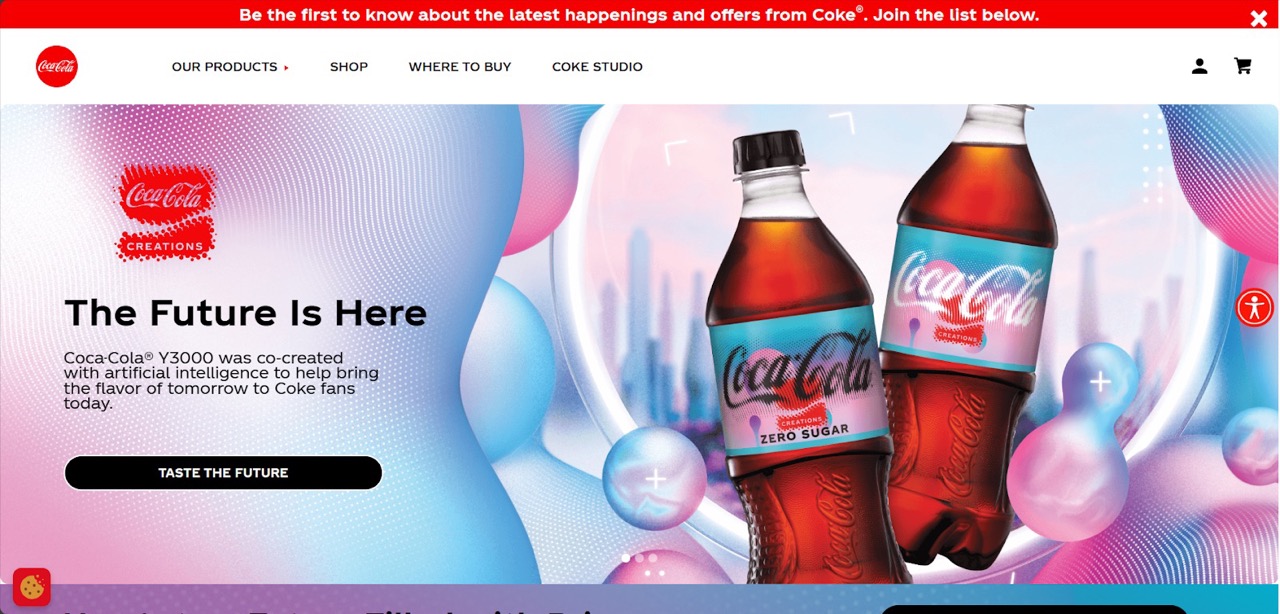
    As at the time of this blog post, here’s what the homepage for the United States looks like: content localization strategy
    And when you switch to the Republic of Korea, the homepage transforms into this:

    Then we switched location to Columbia, and this is what came up: 

    This all shows how Coca-Cola uses location to present unique landing pages to each website visitor, thereby reflecting the culture and language of each visitor’s country.

    3. Localized Social Media

    This is yet another excellent example of Coca-Cola’s hyper-localization.

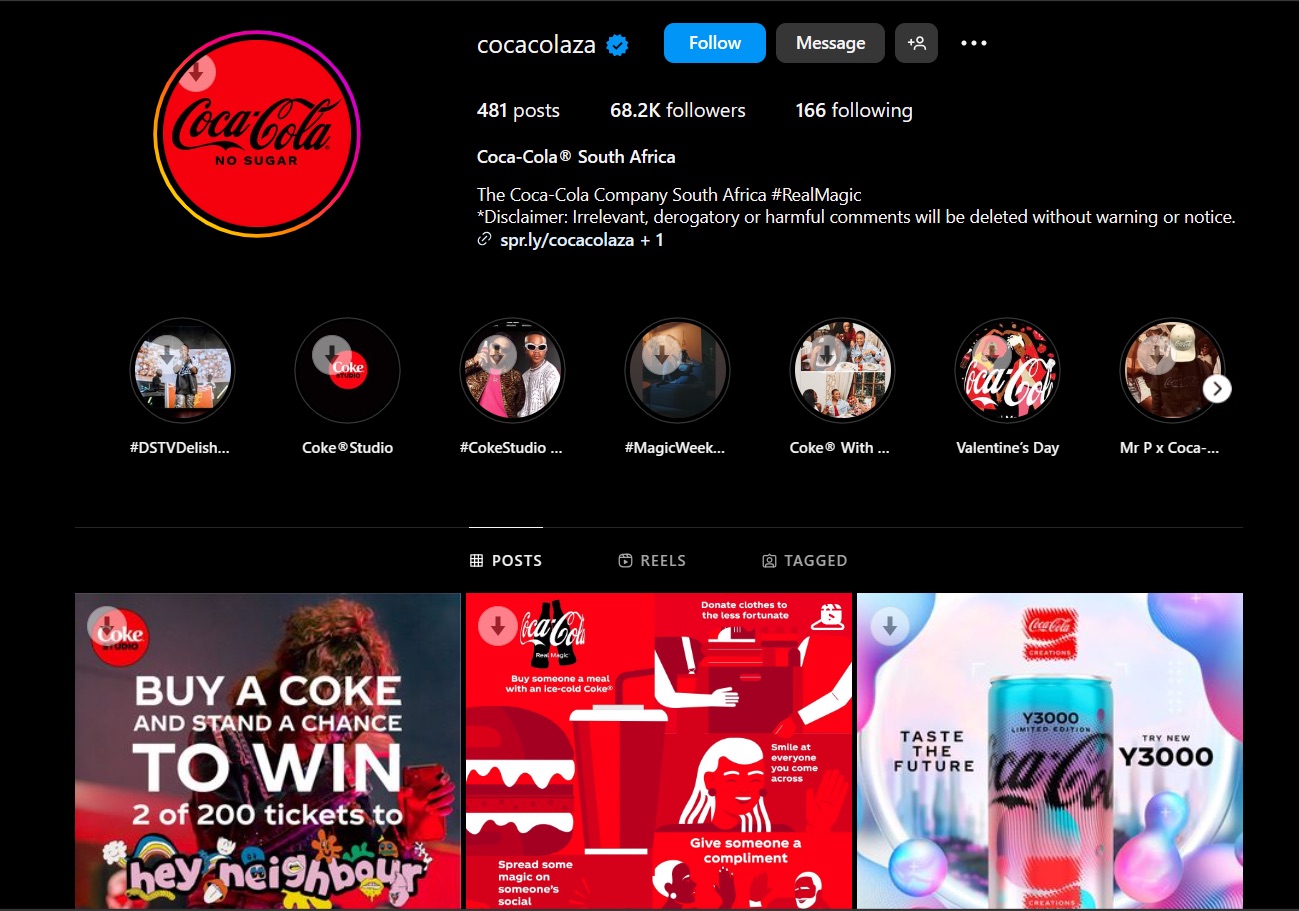
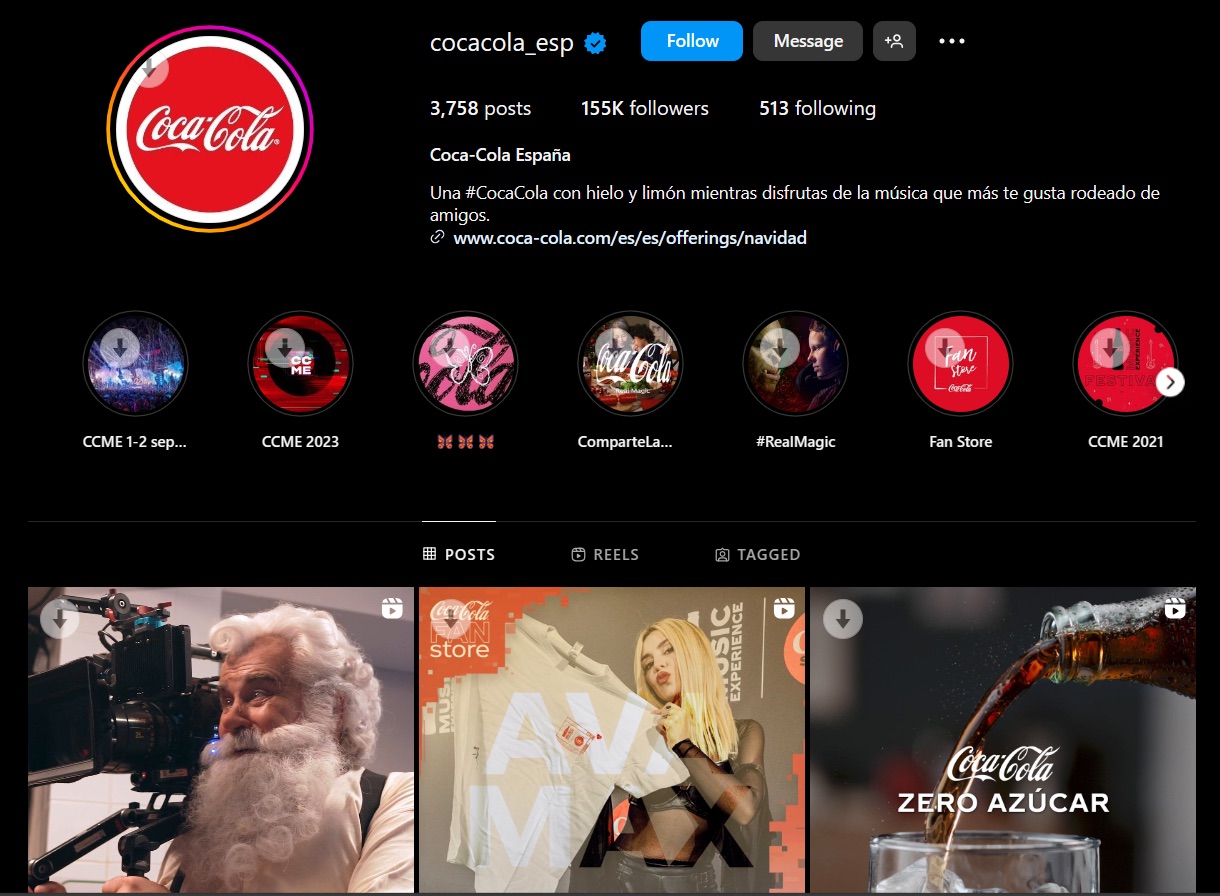
    The drink company operates different social media channels for each region it serves. Each country’s social media handle, description, links, and overall content are unique. 

    For instance, this is what Coca-Cola’s Instagram page for South Africa looks like.
    content localization strategy

    And when you check the IG page for India, this is what you’ll see:

    You can also check out Coca-Cola’s España page:
    content localization strategy

    With multiple social media channels, Coca-Cola feeds its audience in each country with locally inspired and unique content. This is one of the open secrets behind the company’s global reputation and yearly profit. 

    And speaking of profit, let’s briefly discuss how Coca-Cola makes more money using the localization strategies we’ve discussed

    How Coca-Cola Drives Revenue with its Content Localization Strategy

    Is Coca-Cola even making money with its hyper-localization?

    Yes.

    Coca-Cola’s revenue has kept rising consistently in recent years. According to Macrotrend’s recent data, the company’s revenue for the past twelve months, ending June 30, 2023, was $44.140B, a 6.82% increase year-over-year. This follows an 11.25% increase in revenue from 2021 to 2022 — and a 17.09% increase from 2020 to 2021. 

    These figures tell us one thing: Coca-Cola’s marketing strategies do work.

    And beyond the profits, Coca-Cola’s hyper-localization approach also contributes to the company’s popularity worldwide. In 2021, VentureCapitalist named Coca-Cola among the top 100 companies in the world.

    Now that we know Coca-Cola’s localization strategies work great, let’s discuss how each system drives revenue growth.

    1. Localized Packaging and Distribution

    Using local packaging and distribution helps Coca-Cola save huge annual operating costs. 

    Coca-Cola has a global distribution network covering North America, Latin America, Europe, the Pacific, Africa, and Eurasia. The company’s local bottling partners produce, label, and ship to local agents. These agents use local road transport to get Coca-Cola’s products to stockists, distributors, retailers, and customers. 

    With this, Coca-Cola saves vast sums on foreign exchange for its production, packaging, and distribution worldwide. 

    You may also notice that Coca-Cola has a supply chain to recycle glass bottles. This is yet another effective way the company saves costs and resources while maximizing profit.

    2. Localized Promotions

    Coca-Cola spends up to $4 million yearly on localized promotions across different continents. 

    The company uses its localized promotions and campaigns to win the hearts of new customers and retain existing ones in different regions. Coca-Cola also partners with local celebrities in each region to create outstanding promotional campaigns that resonate with people.  

    content localization strategy

    The famous Gigi Hadid featured in a Coca-Cola campaign

    These campaigns with celebrities make people trust Coca-Cola and buy easily. With this, the company maintains stable sales records worldwide, despite the presence of local competitors. 

    Coca-Cola also uses its social media accounts to announce region-specific offers, introduce new or rebranded products, and celebrate special holidays with people in different countries. 

    All these help Coca-Cola connect better with its target audience and maintain an evergreen reputation. 

    And the effect?

    Steady sales every year, coupled with stronger relationships with customers.

    What You Can Learn From Coca-Cola’s Content Localization Strategy

    There are several lessons to learn from Coca-Cola’s strategies. 

    But hold on.

    We have to admit we can’t possibly cover every tiny detail in this one post, so we’ll summarize the key takeaways you can easily adopt.

    • Offer Localized Products and Variations

    There’s no need to force the same product down everyone’s throat.

    Notice how Coca-Cola creates different variations of its drinks for specific countries and target audiences? In India, you will find Vio spiced buttermilk, and in South Africa, you’ll see the Sparletta cream soda variant. 

    You can consider creating unique variants of your products or service packages for specific regions only. 

    • Use Visual Content

    Coca-Cola doesn’t just talk the talk; they walk the walk in their localization strategy.

    Their strategy extends beyond words to visuals, to —images, designs, and videos. They use colors, graphics, and cultural nods in advertisements and packaging to connect with their audience. They also collaborate with local ad agencies to ensure their marketing messages resonate with local audiences.

    You should pay attention to these things when crafting your own content localization strategy. 

    • Adopt Local Manufacturing and Distribution

    Coca-Cola has factories in many countries, which reduces logistics costs and environmental impact. This also allows them to tailor their products to local tastes.

    The company collaborates closely with its local workforce to experiment with different flavors and ingredients. 

    When feedback is needed, Coca-Cola gets authentic information directly from individuals within its target market.

    • Use Original Marketing Content

    Coca-Cola doesn’t just translate English ads to other languages and stop there. 

    They often collaborate with local actors, actresses, musicians, and influencers to create original marketing content that will appeal to a specific audience. 

    Put simply, Coca-Cola makes its target audience feel like the ads they see are specially made for them, which increases the conversion rates of those ads. 

    • Have Cultural Sensitivity

    Coca-Cola often shows in-depth cultural knowledge in many of its localized campaigns. This shows that the company recognizes the cultural nuances in various regions. 

    So, be careful not to overstep cultural boundaries when localizing your content for any target region.

    FAQs

    1. How Does Coca-Cola Target Its Customers?

    Coca-Cola is a global brand that sells to people of different cultures, customs, and climates. As a result, the company targets different segments of the population. 

    It also adjusts its products to suit local tastes, such as making its Asian version sweeter than its version in other countries.

    2. What Strategy Did Coca-Cola Use To Become Global?

    Several factors drive Coca-Cola’s global expansion. The company leverages innovative marketing campaigns, strategic partnerships, and a constant commitment to providing high-quality products that consumers enjoy. 

    Coca-Cola tailors its campaigns to appeal to the cultural nuances and preferences of specific regions and countries. 

    It often incorporates local celebrities, traditions, and languages in its advertisements, which helps to create a stronger connection with consumers and foster brand loyalty.

    But more importantly, content localization is a powerful factor that has helped Coca-Cola maintain a global reputation for many years.

    3. How Does Coca-Cola Adapt To Other Countries?

    Coca-Cola’s products are standardized, but the company has introduced localized flavors to cater to the taste preferences of customers in various regions. 

    For example, Coca-Cola has introduced new flavors like Green Tea and Muscat Grape in Japan. Similarly, Coca-Cola offers Thums Up drinks in India with a stronger flavor many locals enjoy.

    What Should You Do Next?

    Take action.

    With all you’ve read about Coca-Cola’s localization strategies, you shouldn’t doubt whether content localization is right for your business. 

    Leverage what you’ve learned about how Coca-Cola targets customers in every continent, and do something similar for your business. 

    Consider implementing localized website content, social media pages, and marketing campaigns. If you have physical products, consider localizing your production or distribution process to cut costs and maximize profit. 

    Take as much cue as you can from Coca-Cola’s global marketing strategies to reach your target customers. 

    Adios Amigos.
  • Spotlight: An Explicit Look Into How Fresha Penetrates 6 Countries

    Spotlight: An Explicit Look Into How Fresha Penetrates 6 Countries

    Sometimes, the perfect recipe for success is to embrace simplicity and offer great value for money. 

    This is what Fresha embodies and has been using to generate massive revenue in the beauty and wellness industry.

    The company offers a simple, flexible, and powerful booking software for Salons and Spas worldwide. 

    That seems like all, yeah?

    Not quite.

    Behind the scenes, Fresha uses several strategies to achieve global success. And in this article, we’ll divulge all the details about how Fresha penetrates major countries across the globe.

    You ready?

    But First…A Brief Overview 

    Fresha is a U.K.-based company formerly known as Shedul. The company was founded in 2014 by Nicholas Miller and William Zeqiri.

    With headquarters in London, Fresha serves thousands of customers worldwide, and is recognized as a leading software in the beauty and wellness industry. The platform provides a place to discover, book, and pay for beauty appointments with local providers. 

    It’s a simple and effective software solution for local salons, barbershops, and spas in any part of the world. 

    Now, speaking of serving the whole world, let’s discuss how Fresha serves customers globally.

    How Fresha Penetrates 6+ Countries and Serves Local Businesses Worldwide

    While other companies rely on paid advertisement, Fresha combines many effective strategies to penetrate different countries organically.

    Here are the top five strategies Fresha uses:

    1. Subscription-Free Offering

    Unbelievable, right? We know.

    Booking and managing appointments is free on Fresha, and it’s also free for businesses as well.

    But then, how does Fresha make money?

    The company charges a 20% new client fee on the first appointment you get from a client who finds your business via Fresha’s marketplace. And after the first appointment, it’s free forever.

    However, there’s a 2.19% payment processing fee and a $0.20 charge on every card transaction. Meaning, for clients that find you through the marketplace – and pay through the app as well, Fresha takes a cut.

    You gerrit?

    Which means…Fresha only makes money when you make money. 

    So if your business hits the low, you won’t sink in subscription fees or other hidden charges. This is why many small businesses in 6+ countries prefer this scheduling platform to others.

    2. Localized Website Content

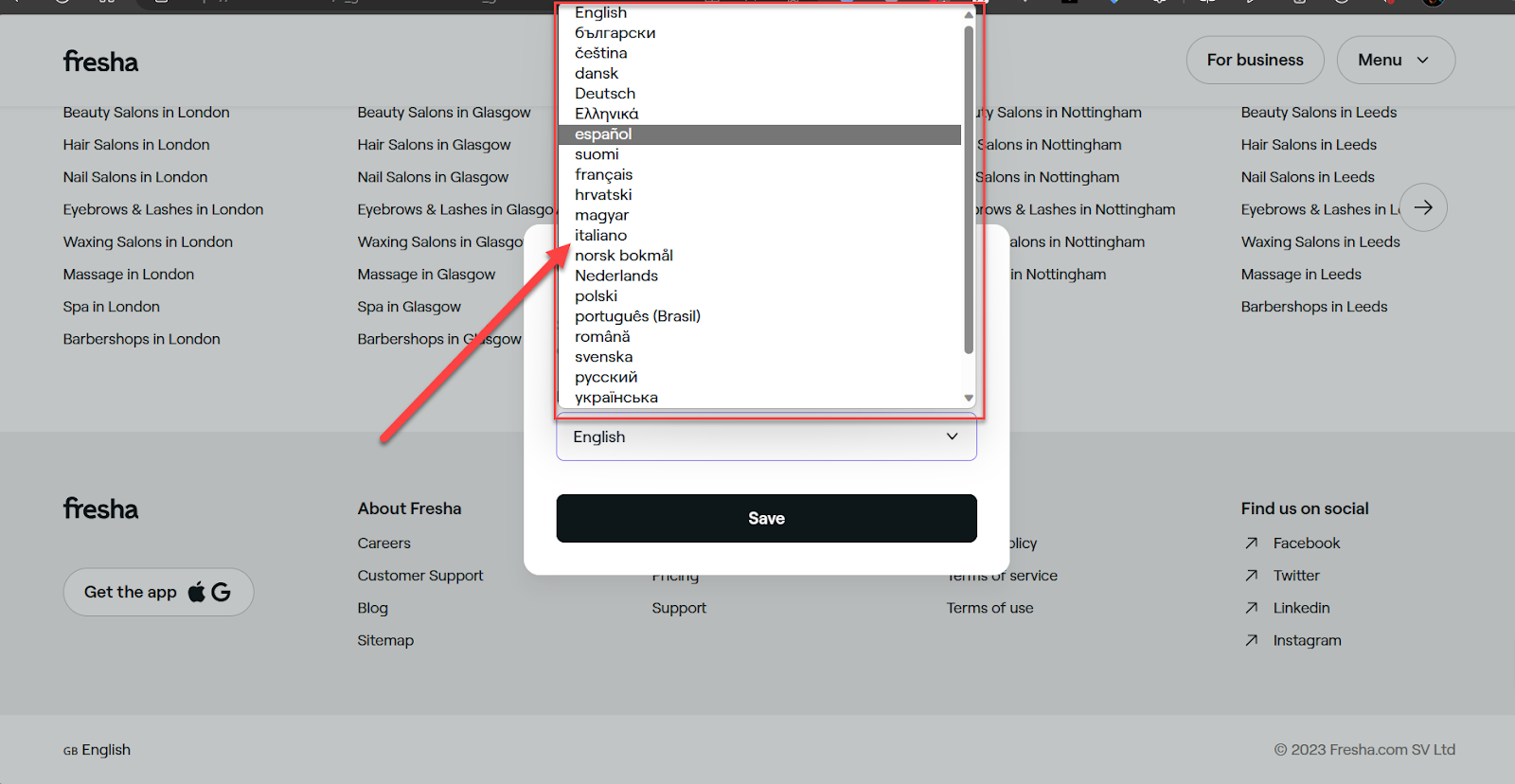
    Fresha’s official website provides a language-selector button at the bottom of each page. This button allows every visitor to view the company’s website in their native language.

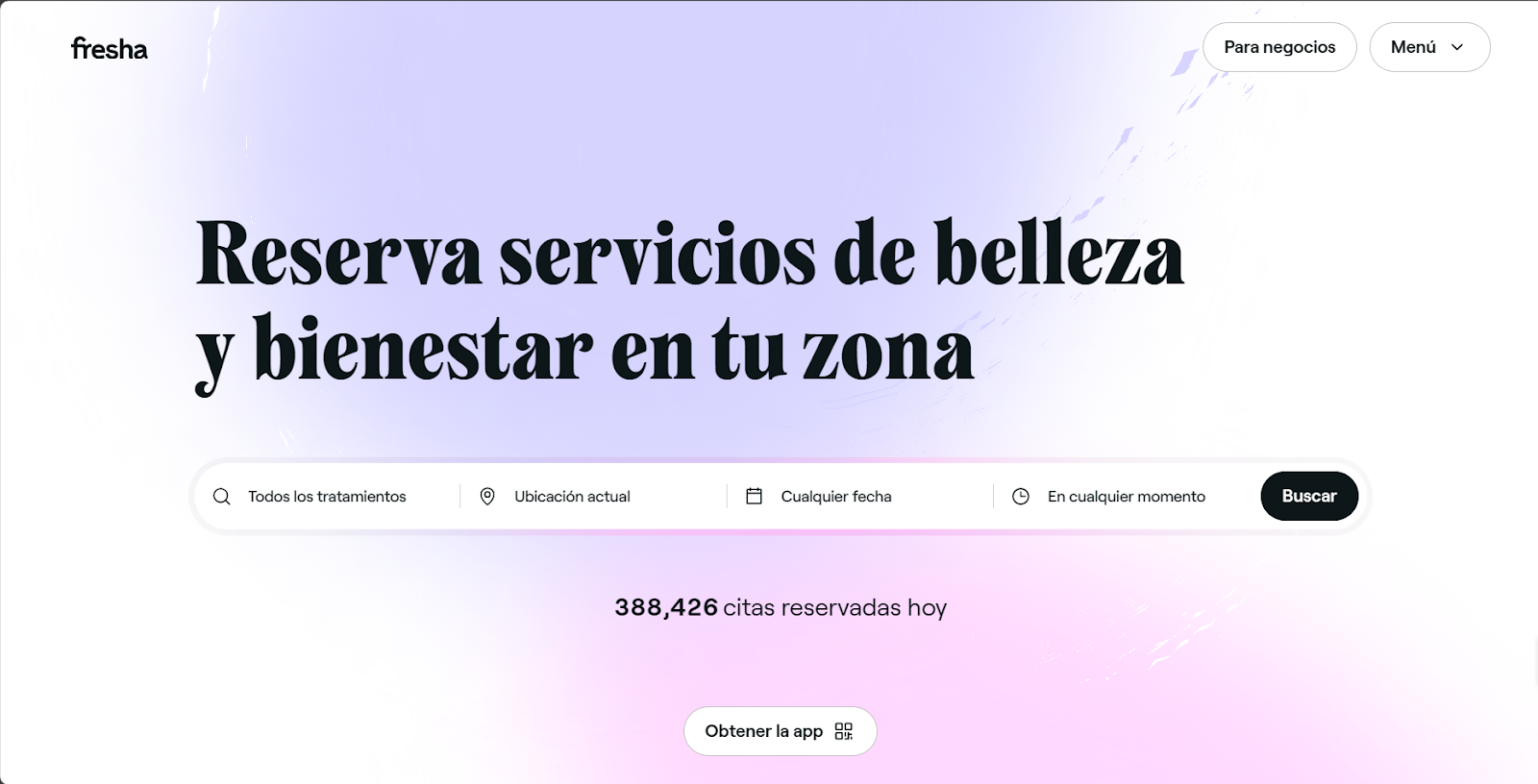
    See the screenshots below.

    When you click the button, a language-selection screen pops up as seen below.

    Fresha's selection screen

    And here’s what it looks like after switching to Espanol.

    Fresha

    3. Localized Payments

    Despite being a U.K.-based company, Fresha allows payments to be processed in local currencies within its platform. 

    Here’s an example of payment information showing the United Arab Emirates dirham for a Dubai-based salon.

    Image source: Thesalonbusiness

    Fresha also provides card terminals for processing local payments in your saloon or spa. Such card transactions attract 2.19% plus a $0.20 equivalent charge on every payment. 

    4. Continuous Partnership With Local Businesses

    Every business owner who registers on Fresha is referred to as a partner.

    But it doesn’t stop there.

    Fresha frequently interviews these local business owners and posts the videos on Instagram, Facebook, LinkedIn, Twitter, and YouTube. This spotlight approach makes business owners happy and builds a true sense of partnership. Posting the interview videos online also gives more credibility to their individual brands. 

    Screenshot showing recent interviews with business owners

    It’s also worth mentioning that Fresha has a marketplace where you can list your business and get found by new customers. So, despite having clients located in different countries, Fresha is still able to connect with them meaningfully. 

    5. Transparency and Excellent Customer Support

    Fresha is one brand that keeps simplicity and transparency at the center of all it does. The company states clearly on its website what to expect in its free-forever software plan.

    When it comes to customer support, Fresha often replies within minutes to email complaints and inquiries. The company also has a brilliantly-managed and active Help Center.

    The Help Center has a part called “Feature ideas,” which allows users to vote for a new feature they want added to the platform. Or recommend tips that can improve the company’s software. 

    What You Can Learn From Fresha’s Strategies

    Fresha’s business strategies are worth emulating, and here are some suggestions you can implement in your business.

    • Find a way to offer free features and resources that help people get a “taste” or “feel” of your products and services.
    • Get your website’s content localized to fit the languages, cultures, and tastes of people in other regions.
    • Integrate support for local payment methods and currencies in your business platforms.
    • Offer excellent customer support for customers in different target regions.

    FAQs

    Who Is Fresha For?

    This platform is a great option for budget-minded stylists and salons. 

    It’s free to use, and there’s no steep learning curve. You can just start using it right away. Additionally, your salon will benefit from visibility on the Fresha marketplace.

    Is Fresha No Longer Free?

    The plans are free to use. However, users pay a 20% one-time commission for every new booking made via the Fresha marketplace.

    Meanwhile, payment processing and marketing messages are also optional paid extras.

    What Countries Is Fresha Available In?

    Fresha is currently available in 120+ countries, serving 100,000+ partner businesses and supporting 450,000+ stylists and professionals. 

    Additionally, card terminals are accessible in Canada, Australia, Austria,  France, Germany, Belgium, Croatia, Czech Republic, Finland, Greece, Ireland, Italy, Lithuania, Luxembourg, Netherlands, Poland, Portugal, Spain, Switzerland, the United Kingdom, and the United States.

    What Next?

    Apply all you’ve learned about Fresha’s strategies to your business. 

    The company keeps expanding globally by offering free resources, partnering with local businesses, and providing localized content and payment options. 

    These strategies might seem daunting, but Fresha has shown us that they work really well for penetrating various countries worldwide. 

    It’s your turn now. Apply these strategies to get your brand on the global map. 

    Goodluck!

  • How to Use an eCommerce Blog to Drive More Customers

    How to Use an eCommerce Blog to Drive More Customers

    Building a successful eCommerce brand from the ground up is no small feat.

    You need a good product and a functional online store. And if you’re lucky enough, find a good company to handle shipping without disappointments.

    However, after all that work comes another challenge — expanding visibility to reach more customers. 

    That’s where an eCommerce blog can help you out.

    This article explains everything about creating a blog for your e-commerce brand, and how you can drive customers with it. So let’s dive in. 

    Having an eCommerce Blog: Is It Necessary?

    A blog is a section on your website where you publish quality content to educate your audience and build trust. 

    It’s a platform for sharing product comparisons, expert opinion posts, and comprehensive guides on how to use your products. And the good thing about having a blog is that — the content attracts organic traffic from search engines like Google.

    Here’s all the good stuff you can gain from having a blog for your eCommerce brand:

    1. More Revenue

    The more people visit your e-commerce website, the higher your chances of getting more sales.

    When you constantly publish quality content on your blog, Google shows your website to more people. And when that happens, your website will attract more visitors and sales, which ultimately increases your revenue.

    2. Added Value At No Cost

    Blogging is an easy way to add more value to your customers — at almost zero cost.

    You can leverage your e-commerce blog to publish:

    • in-depth product reviews
    • helpful guides that address common complaints
    • and product comparison articles to educate your audience

    Such content can convince your target audience to become paying customers.

    3. Become an Authority

    Your blog is an excellent platform to showcase your expertise on subject matters around what you sell. It’s a perfect place to give your expert opinion on trending topics about your products. 

    So, if you see any trending topic you want to blog about, don’t hesitate.

    Driving Customers With an eCommerce Blog: 5 Key Steps

    Now that we’ve discussed what you stand to gain from an eCommerce blog, let’s dive into the how.

    Step #1: Add a Blog Section to Your Website

    Check the backend of your current e-commerce website and find the option to add a blog. 

    The steps vary from platform to platform, but most e-commerce platforms have a straightforward guide for adding a blog section

    If you are contemplating good e-commerce platforms with seamless blogging functionalities, check out Shopify, WooCommerce, Magento, BigCommerce, or 3DCart.

    Regardless of your e-commerce platform, each blog post must have a title, short description, and main content. We’ll discuss this in more detail at step 4 (SEO checklist).

    Step #2: Conduct Keyword Research

    This critical step helps you know the type of blog content to create.

    A good way to begin your SEO keyword research is by analyzing the top competitors ranking for the products you sell. For example, if you sell pet accessories, go to Google and punch in a critical keyword like “buy pet accessories.” 

    You will see something like this:

    Scan through the Google search results page to see stores already ranking for that keyword. Input the URL of these websites into tools like Ahrefs, Semrush, or other SEO tools.

    By doing this, you’ll identify the organic keywords that make your competitors rank high on Google. However, ensure you only pick the keywords relevant to your products. 

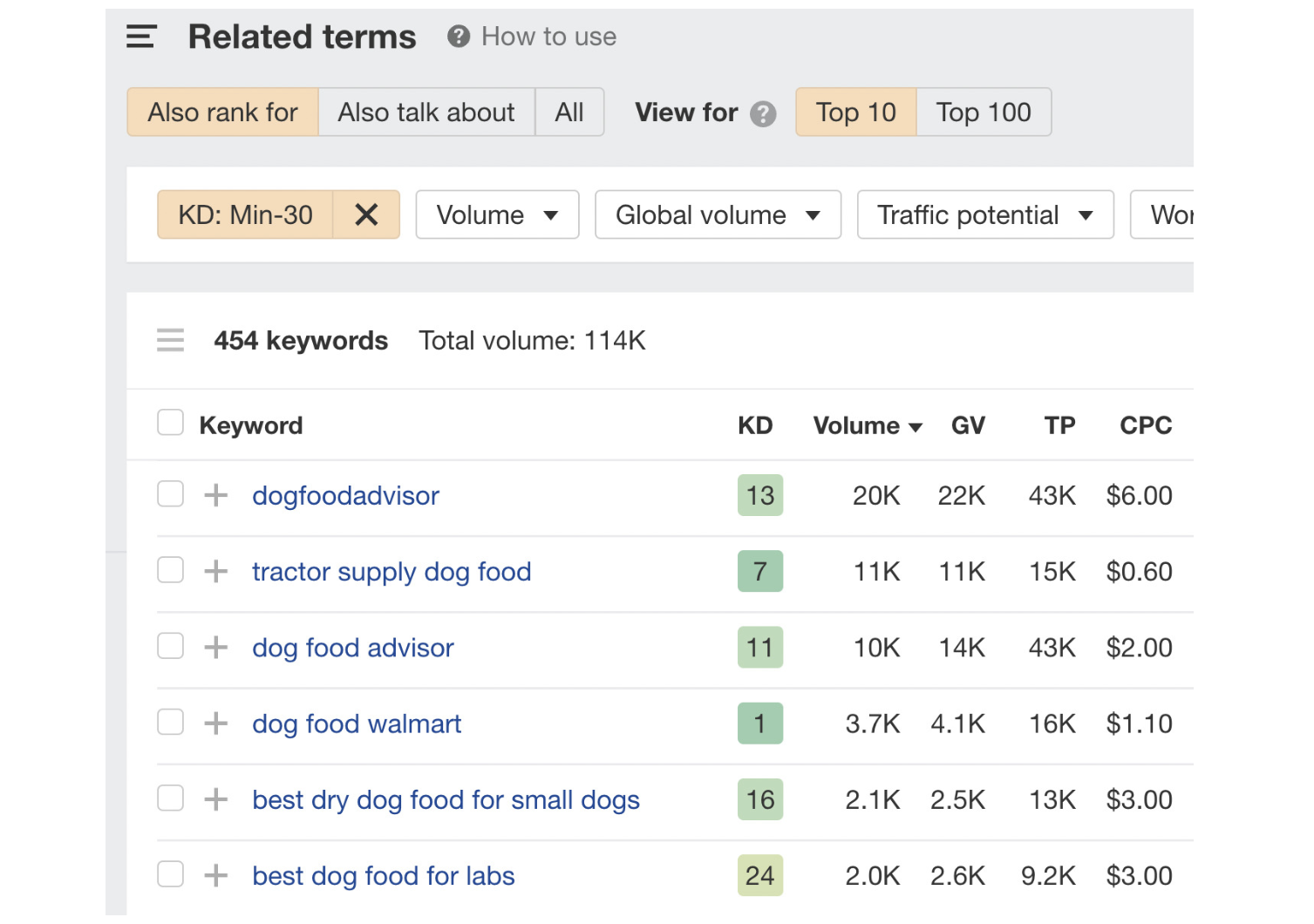
    Check out this screenshot.

    ecommerce blog keyword research

    Image source: Ahrefs

    Assuming you sell dog food, the keyword “dog food walmart” in the above screenshot shouldn’t be your concern at all.

    Focus on relevant keywords like “best dry dog food for small dogs.” 

    Step #3: Create a Content Strategy and Calendar

    After selecting your relevant keywords in Step 2 above, proceed to categorize them, as this will help you create an effective content strategy.

    To see this into action, let’s create a content strategy and calendar for a dog supplies store.

    1. Group Your Keywords

    Put all the keywords relating to dog food in one category and others relating to dog accessories in another category. 

    2. Create a Content Strategy

    Handpick the most relevant keywords from each category. For the dog food category, you can select a keyword like “dog food for small dogs.And for the dog accessories category, you can select “designer dog collars.” 

    The next step is to write detailed blog posts around these relevant keywords and publish them on your e-commerce blog. There’s no limit to how many relevant keywords you can write about. 

    For example, 

    • puppy food for sensitive stomach”, 
    • best food for little dogs
    • designer puppy collars

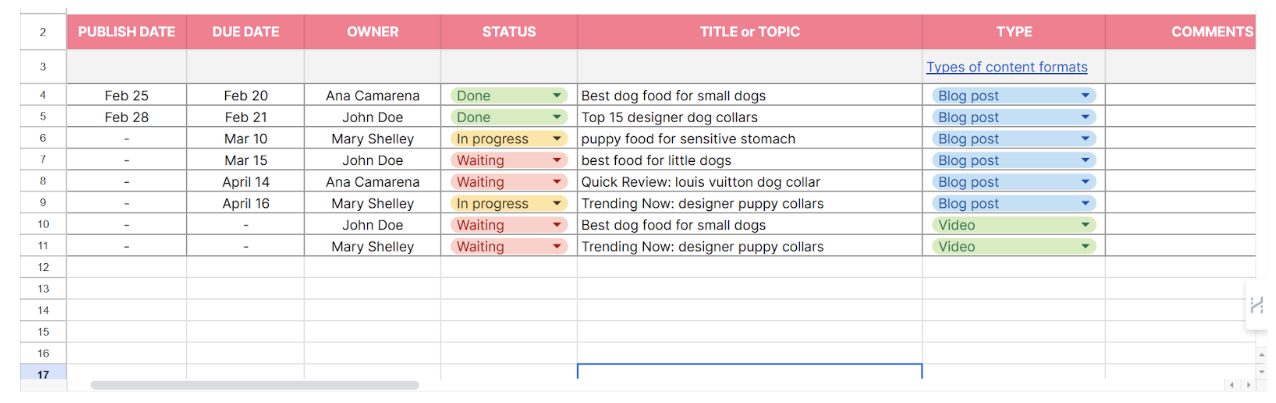
    The last part of your content strategy is to draft a posting schedule — known as a content calendar. This will determine the time and frequency you post on your e-commerce blog.

    See an example below:

    eCommerce blog calendar

    Step #4: Create an SEO Checklist

    Now, there are certain things you have to do to optimize each blog post for search engines. 

    These include:

    1. Add Alt-Text for every image in the blog post.
    2. Write a meta title and meta description for each blog post.
    3. Include target keywords and sprinkle other relevant keywords where possible.
    4. Use the right heading and subheading tags (H1 tag for the blog title, and H2, H3, or H4 tags for subheadings).
    5. Include external links to relevant research papers, studies, or authoritative websites like Wikipedia or Forbes.   

    Step #5: Promote on Social Media

    Even if you are waiting for search engines to rank your blog posts, you should still promote them on social media.

    Fun fact: Social media provides a wide audience reach and builds more trust, which makes Google rank you easily. 

    So whenever you publish new content on your blog, remember to talk about it on Instagram, Facebook, Twitter (X), TikTok, and other social media platforms.

    You can also convert your blog content into digestible newsletters and send them to your customers’ emails regularly. However, remember to include a link in each newsletter that points back to the full blog post on your website.

    Useful Tips for Successful eCommerce Blogging

    It’s possible to blog without getting any results. And this is a reality many eCommerce brands face.

    However, you can avoid such mistakes by taking note of the following. 

    Do More of These Things:

    • Remember to offer value before attempting to sell your products.
    • Tailor your content to the needs of your audience. If you sell pet accessories, don’t blog about hair styling for women. 
    • Take time to educate your audience about your products and services. Don’t always assume your audience knows everything about your products.

    Avoid Doing These Things:

    • Posting inconsistently at random times. This can push your customers to competitors that post consistently.
    • Publishing hard-to-read blog posts with too much industry jargon. No one wants to read something they can’t pronounce.
    • Posting irrelevant content. If you notice your customers don’t like a specific type of content, stop posting it.

    Final Thoughts

    If your eCommerce brand still lacks a blog, you’re doing your brand a great injustice. 

    Creating a blog for your eCommerce brand is the “surest” way to make more people notice your brand, trust you, and buy from you. Don’t delay any longer. The earlier you start, the faster you’ll start seeing results.

    And if you seek professional help, reach out to us at Inscribe. We’ll help you drive more customers with your eCommerce blog. We’ve generated over $10 million for our clients and we can get results for you as well. Book a call here to get things started.

  • Content Strategy for SaaS Companies: Your Guide to Customer Acquisition

    Content Strategy for SaaS Companies: Your Guide to Customer Acquisition

    The SaaS industry is tough. It’s cold. And only the strongest products become profitable.

    However, having a great SaaS product is not enough to drive massive revenue. Tailored content marketing is the most sustainable way to do so. 

    But the hard truth is… 

    No SaaS company can succeed in content marketing without a solid content strategy. 

    A content strategy is what allows you to target your ideal audience. It guides how your content will be created and distributed to drive organic traffic and achieve your revenue goals. 

    So, how do you craft a winning content strategy for your SaaS company?

    You’ll find out in this guide. 

    SaaS Content Strategy: What Does It Mean?

    Content Strategy can mean different things, because “content” exists in several forms.

    However, for the purpose of this guide, I’ll focus on written content. The type of content that gets you on page 1 of Google — and still gets you customers.

    Like the GPS for your content – a content strategy guides where your content should go, how to get there, and ensures it doesn’t get lost in the jungle of other “content” out there.

    You get the picture? 👀

    Now that we’re clear on what a content strategy means, let’s get into all the details. How can you create a content strategy that brings you customers from the largest search engine in the world?

    Content Strategy for SaaS Companies: A Step-By-Step Guide

    Follow these simple steps to create a solid content strategy for your SaaS.

    Step #1: Laying the Foundation — Know Your Audience

    It may sound cliche, but it’s the truth.

    Quick story here…

    The other day, I was on an onboarding call with a client.

    He’s creating a product to help students better understand what they’re taught at school, without getting a fancy home teacher or having to attend extra lessons. The product is hands on and practical, unlike the existing rigid educational system in his country.

    I’m like…who’s your target audience? He goes…the students of course.

    All too many times, many people think their target audience is inherently the person their product or service is for.

    What do I mean?

    If you sell flowers, your target audience isn’t automatically “women.” It’s men too. It’s event decorators, wedding planners, anyone who could possibly need flowers, and anyone who could possibly get flowers for those who need them.

    You feel me?

    You have to think as far as possible, because the farther you think, the easier it is to pull your entire target audience from Google. Because your content will be able to target/speak to each audience.

    Step #2: Understand the Search Intent of Your Audience

    Your audience will most likely fall into these 3 categories.

    1. Unaware Audience — doesn’t know you exist or you can help them.
    2. Semi-Aware Audience — knows you kinda exist, but isn’t convinced you’re the best.
    3. Aware Audience — knows you exist, knows there are other people, but believes you’re the best. This is the audience that’ll give you money. However, an Aware Audience can also be sub-categorized into problem-aware and solution-aware. (more on that later).

    Now…

    There are 4 reasons why your audience will search for your SaaS product or service, and it’ll show up on Google.

    • Informational intent
    • Commercial Intent
    • Transactional Intent
    • Navigational intent

    Creating content around every one of these “intents” is directly proportional to how your audience finds you.

    Step #3: Keyword Research

    Wanna throw shots in the dark? Skip this part.

    But if you’re like me, and you prefer to always go in prepared, read this section carefully.

    Keywords fall into 2 major categories:

    • Branded Keywords
    • Non-Branded Keywords

    Branded keywords are keywords with your “brand names” in them.

    These keywords are often used by your aware audience – with navigational intent.

    For example, typing “Binance” into the search engine will most likely bring up Binance’s website. These people know Binance exists, they just need help “navigating” to where / what they wanna check out on Binance.

    content strategy for saas comapnies

    On the flip side, non-branded keywords don’t have your “brand name” in it.

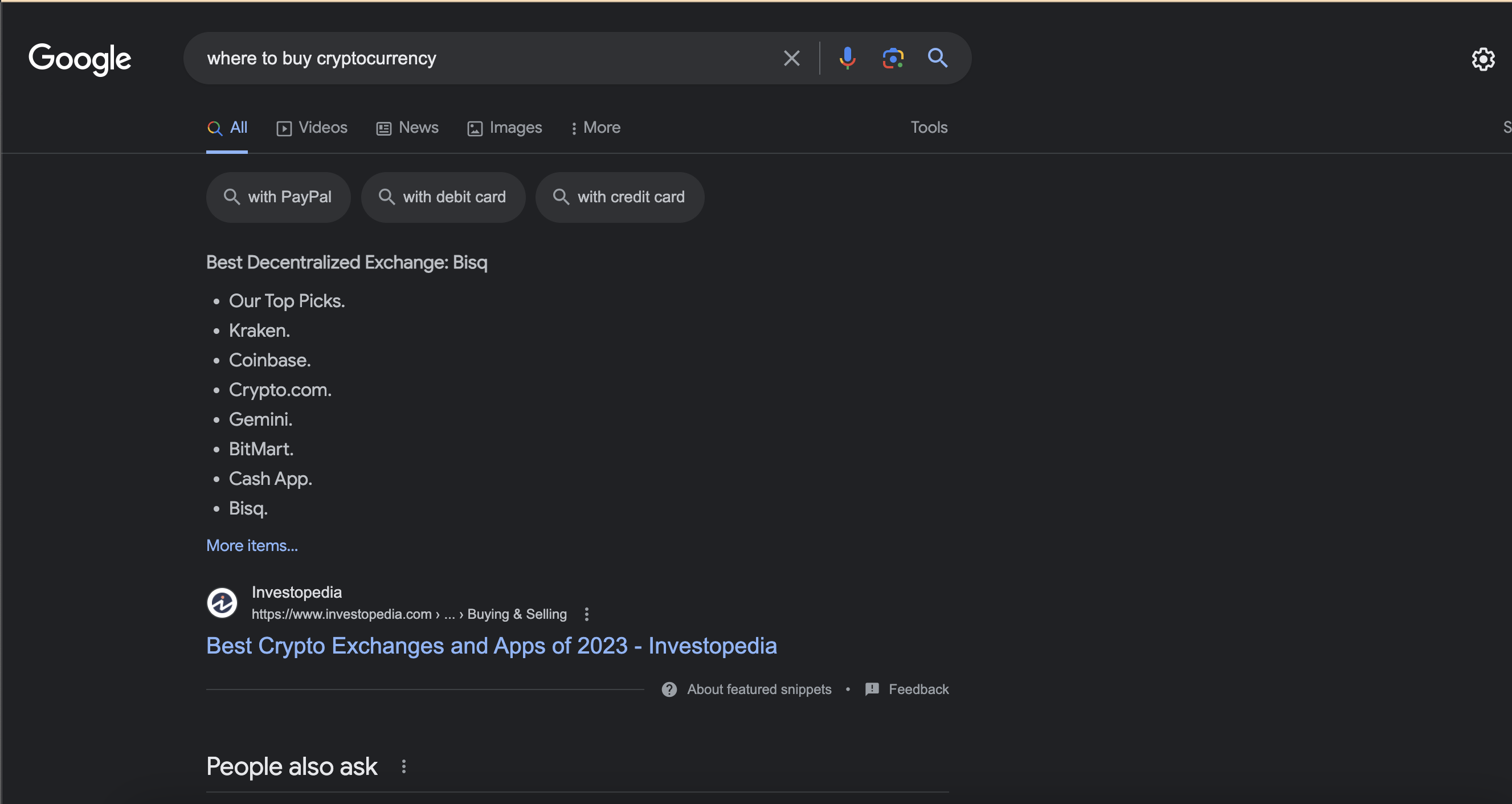
    However, they’re keywords still used to find brands in your industry. For example, let’s use “non-branded” keywords like; “top cryptocurrency company” and “where to buy cryptocurrency” to find Binance.

    You get the idea?

    Content Strategy for SaaS Companies

    Now, to get a hold of these keywords, you need to do keyword research

    You’ll need a keyword research tool like SEMrush, Ahrefs, Screaming Frog, or Moz. These tools gather real-time information from search engines. 

    You can do keyword research with these tools — in two ways. I’ll be using SEMrush as my preferred tool.

    Method 1: Domain Overview

    The first way is to enter your domain URL and put it in the “domain overview” section of SEMrush.

    content strategy for SaaS Companies

    When you do this, you’ll get a list of keywords people usually use to find your website.

    Be prepared though, it’s often a long list. The keywords can be up to a million or more, or less, depending on your niche/industry.

    However, this method is not the most accurate because people can also find your website without using keywords directly relating to your business.

    For example, we did an audit for a Saas brand a while back, and their domain name is a synonym for chicken.

    And no, they don’t sell chicken. They sell software for recruiting, training, and hiring top talent. We discovered that a large percentage of their organic traffic was from people looking to buy chicken, not talent training software.

    However, you can still use this method — only if you sift the keywords in sync with your SaaS — from the ones that aren’t.

    Method 2: Keyword Overview

    The second way is to input the main keyword of your product or service into the “keyword overview” section of the SEMrush tool.

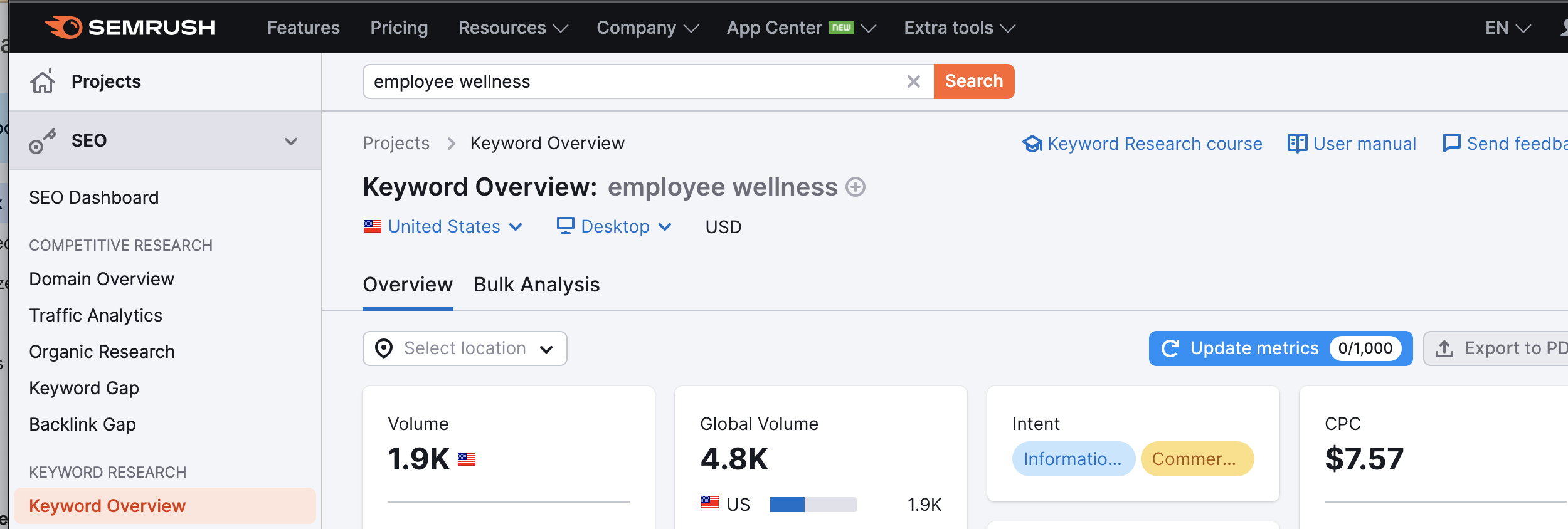
    Now, let’s assume we’re doing keyword research for an HR tool. In this case, one of our main keywords is “employee wellness.”

    Content Strategy for SaaS Companies


    Step #4: Categorize Your Keywords

    Now that you’ve discovered these keywords, let’s get cooking.

    You have to categorize the keywords you’ve discovered (from your keyword tool) according to the audience you’re trying to target, and their intent as well.

    These keywords will guide your next step because you’ll categorize them for your content pillars (more on that later). You also want to prioritize the keywords with high volume and low keyword difficulty.

    Step #5: Create Your Content Pillar 

    For instance, let’s say you have a SaaS AI tool.

    During your keyword research, you discovered that the keyword; “AI-powered SaaS tools” is a trending keyword with high volume. You can create a content pillar that’ll include several article topics to target that keyword AI-powered SaaS tools.

    You feel me? 👀

    If you’ve gotten to this step, your content strategy is 99% done.

    That’s because your content pillars are the core strategy. Once you have all your content pillars, you’ll use them to create the content calendar or timetable — for how you want your articles to roll out.

    Step #6: Put Together Your Content Strategy

    This is the point where you tie everything together. Use all the information you’ve gathered from Steps 1 to 5 to create a content strategy for your SaaS.

    Keep in mind that your content strategy will include:

    • The type of content that will be created
    • When the content will be published

    Once you have your content strategy mapped out, expand it into a detailed content calendar.

    And you may be asking: What’s a content calendar?

    Well, it’s just a regular calendar listing the days of the month and the corresponding content to be published on each day. 

    Step #7: Define Your Content Distribution and Promotion Channels

    You don’t want to spend time creating great content that no one will see, do you?

    You want as many eyes as possible to engage with your content. This is the most important piece of the puzzle when creating a SaaS content strategy. 

    Some effective content distribution and promotion channels include:

    • The blog section of your company’s website
    • Social media pages
    • Webinars and virtual events
    • Online groups, communities, and forums (like Reddit)
    • Email list (good for newsletters and sales campaigns)

    Though your aim is to get Google and other search engines to crawl the content on your website, it is helpful to also promote the content on social media, public groups, and so on. This can help accelerate the process because popular content gets indexed quickly and ranked higher by search engines. 

    How To Measure the Success of a SaaS Content Strategy

    While there’s no one-formula-fits-all, some key metrics can help you understand if your content strategy is working or not. 

    Here are some of them:

    1. Reach

    Use Google Analytics to track how far your content has traveled. Check how many people have seen your content and if it’s reaching the right people.

    2. Conversions

    Check if you are getting more clicks, downloads, sign-ups, and purchases.

    3. Engagement

    Check how long people spend on your content, how many comments it gets, and how many times it’s shared. Use tools like Buzzsumo, Apester, and Google Analytics to dig out these records.

    4. Impact

    Measure your content’s impact by tracking social media mentions, shares, and external links earned. Tools like Brandwatch, Talkwalker, and Google Trends can be handy for tracking these metrics.

    Tracking all the above metrics will give you a clear picture of how your content strategy is performing. 

    If the results are positive, then you know your efforts are paying off.  And if otherwise, then it means your content strategy needs improvement.

    Final Thoughts on Content Strategy for SaaS Companies

    Well, well, well…

    If you’ve gotten here, let’s make a toast to you. You’re now in the 1% of people that know how to create a content strategy that drives customers from Google.

    With SaaS companies becoming increasingly similar in terms of features, content marketing is now a must-do for any brand looking to stand out. 

    I hope you make good use of this free guide.

    We follow these same steps to create a winning content strategy for our clients — and we’ve driven over $10,727,000 in revenue for these clients.

    If you’d like to have access to our Content Profit System that helps you drive new customers from Google, book a call with us.

  • Content Localization: An Explicit Guide

    Content Localization: An Explicit Guide

    If you were given a proven technique to reach a wider audience and gain new customers quickly, would you jump at such an offer?

    If you will accept that offer, this article is for you. Sit tight.

    Content localization is a powerful strategy that can help you reach new audiences in international markets, and acquire up to 37% revenue growth.

    In this article, we will discuss everything you need to know about content localization, and how to use this strategy to your advantage. Follow this guide to uncover all the tips and secrets. 

    Let’s get to it!

    What Exactly Is Content Localization?

    Content localization is making your product or service locally accessible to customers in a target location and market – by modifying your website content to match the language and culture of that target audience.

    It often involves translating, redesigning, and customizing your existing website content to completely sync with your target audience.  

    For example, a fashion brand in China that wants to reach a new audience in the United States will have to translate its website content into English, while also modifying the content to sync with American culture and trends. 

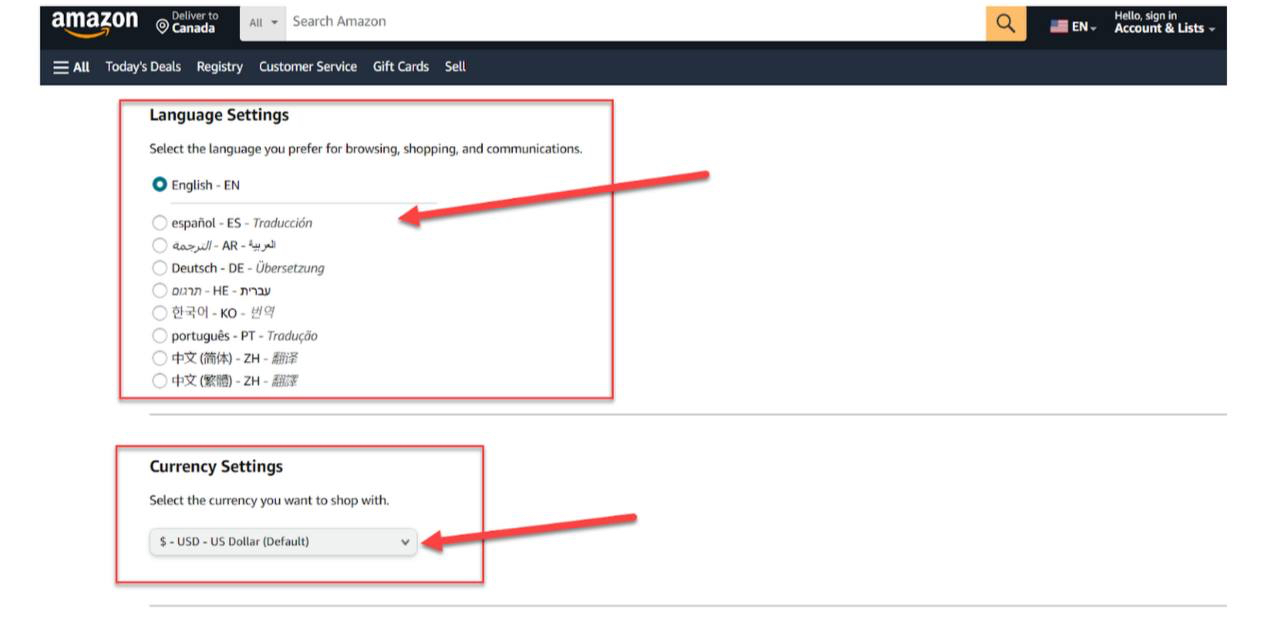
    Here’s a screenshot showing how Amazon uses content localization on its website.

    Country/Region selection page on Amazon.com


    On the above page, Amazon lets you choose your preferred currency and language to make your shopping experience more personalized.

    By switching to another language, the Amazon website not only translates every text you see, but also changes the entire view to feel more relatable. 

    Can Content Localization Help You Win More Customers?

    Yes.

    Content localization helps you attract new customers in a different market, and also build trust with your target audience.

    Think about this…

    Imagine you’re trying to sell a product online to a Chinese audience using website content written in English. Nǐ jiàng rúhé chūshòu?

    See what we did there? 

    If you don’t speak Chinese, you can’t understand content written in Chinese. It’s the same way for a traditional Chinese man who doesn’t speak or understand English.

    But don’t take our word for it. Here’s what research says about localized content: 

    • 65% of people prefer content in their own language, even if it is of poor quality.
    • 73% of people want product reviews in their own language, even if no other information is available in their language.
    • 76% of people prefer products with information in their own language.
    • 40% of people will not buy from websites in other languages.

    Get your content correctly translated into other languages and watch your sales skyrocket. 

    However, be careful not to overstep racial, cultural, or religious borderlines when localizing your content. 

    Step-by-Step Guide to Creating a Content Localization Strategy

    At this point, you already know what content localization is. But then, what’s a content localization strategy?

    A content localization strategy is your unique approach to modifying your website content to target a specific audience. It involves understanding the target audience’s language, culture, and preferences – while tailoring your content accordingly.

    Consistency is the first thing to consider when creating a content localization strategy. Your goal is to ensure that the localization strategy for every region maintains a consistent identity of your brand. 

    Here’s a simple step-by-step guide to creating your content localization strategy: 

    Step #1: Analysis

    Before diving into content localization, hit the brakes. Discern why you want to do content localization and the specific audience you want to target. Here are some steps to help you with doing that.

    • Analyze Your Business Goals

    Examine your company’s needs, goals, and objectives. Determine the reason for content localization. Is it to increase website traffic, improve customer satisfaction, or boost sales? Answering this question will help you determine the best approach to localizing your business content.

    • Conduct Market Research

    Next up is market research. Don’t leave any room for assumptions.

    Stalk your target audience and do a detailed competitor analysis. This will help you determine what content attracts your target audience, as well as what’s trending in the target market.

    Use SEO tools to discover what your competitors are doing and potential gaps you can seize. 

    Step #2: Decision-making

    After doing proper analysis, the next stage is decision-making. 

    Scrutinize your resources—budget, timeline, and team roles. Determine how wide your localization efforts should stretch, which assets take the spotlight, and which parts of the user journey get VIP treatment. 

    To ease the stress off you, you can also choose a content localization expert.

    Step #3: Execution

    Once you’re all set on the decisions, it’s time to execute your content localization plan. 

    Here are some steps to follow:

    • Action point 1: Prepare the content for localization. Format, encode, and remove hard-coded text.
    • Action point 2: Organize files and develop unique style guides, glossaries, and other language assets for easy localization management.
    • Action point 3: Set up a localization tool and assemble a team of language experts to execute your translation projects.
    • Action point 4: Ensure the experts translate, review, and edit all content to eliminate spelling, grammar, and tone errors.
    • Action point 5: Deploy the content to the appropriate platforms and channels.
    • Action point 6: Engage native speakers in conducting linguistic tests to ensure high-quality content across all markets.

    Types of Content to Consider for Localization

    In case you are asking: What type of content should be localized?

    The short answer is everything.

    From product descriptions –  to terms and conditions –  to your company’s mission statement, localize everything possible. 

    Here are some suggestions to guide you:

    1. Localize content that can boost your brand’s awareness and credibility in a new market. This can include website content, banners, videos, podcasts, or even physical flyers.

    A key example of this is how Coca-Cola’s “Share a Coke” campaign would say Share a Coke with “John” or “Sarah” in the USA but feature names like “Aoife” and “Oisín” in Ireland.

    Image source: Cocacolaunited

    2. Localize all marketing materials aimed at driving traffic and boosting conversions. Such marketing materials may include blog posts, social media campaigns, and the content of your paid Ads.

    Pro Tip: Check every text, image, audio, and video to ensure the content is in sync with your audience. Also, pay attention to your legal, technical, and UI/UX content. 

    How Content Localization Benefits Businesses

    Speaking the language of your audience, both literally and figuratively — makes your business relatable and helps you gain traction and trust easily. 

    As a result, you can expect the following benefits:

    1. Improved Online Visibility

    Google and other search engines will begin recommending your business and website content to more people in new regions. 

    2. Higher Website Traffic and Engagement

    More people will click on your business’ website if it’s showing in their language.

    3. Shorter Time to Market

    You can start making sales from day one, if your content has been properly localized and optimized for conversion.

    4. Competitive Edge

    Localizing your content will give you an instant edge over competitors that are yet to penetrate the region.

    5. Effective Marketing and Advertising

    If you choose to run ads, more people will respond and convert if your website is localized. 

    Common Localization Mistakes and How To Avoid Them

    1. Ordinary Translations

    The number one localization mistake people make—is thinking that content localization is “literally” translating your website text into other languages. 

    Too often, they’ll rush to get their website content translated without considering cultural nuances. 

    By all means possible, avoid making such a costly mistake!.

    Content localization requires you to think deeper and ensure that all translated content is adapted to match your target audience’s prevalent culture, religion, trend, and taste. 

    2. Leaving Out Critical Content

    It’s common to see many businesses localize content they deem important – while leaving out the others. This may include localizing only your product pages, while neglecting other important pages like the Terms of Use or Privacy Notice page.   

    Ensure that no page is left out on your website when localizing your content for other regions. Don’t pass off any page as “unimportant.” 

    3. Inconsistent Brand Message

    Avoid situations where you tell a specific audience that your business is eco-friendly, but in other regions, your website content says, “Global warming is crap.”

    *Laughs in global warming*

    Such cheap practices might win you traffic in a new target market quickly. However, it may prove difficult to convert such traffic when the audience discovers the disparities.

    Hence, let your brand message and identity be consistent across all your target regions. 

    How to Measure the Success of a Content Localization Strategy

    Creating a localization strategy is one thing; measuring its success is another. 

    Ensure you set specific goals and performance metrics while creating a content localization strategy. Doing so will make it easy to track the success of that strategy after deployment. 

    And after implementing the strategy, don’t be quick to start measuring. Give it some time.

    While your goals might be different, here’s a general process you can use to measure the success of your content localization strategy:

    • Step 1: Measure the Audience Reach

    Check if you are getting new leads, calls, and inquiries from the audience in your target market. A successful strategy should help you reach more people in the new target region. 

    • Step 2: Look at the Conversion Rate and User Engagements

    A successful localization strategy should get you more website visits, clicks, and social interactions. This is the ultimate way to know if your localization strategy has been successful.

    If your website content isn’t converting or getting engagements after localization, get a CRO expert to check for issues. You can also re-create your old content using new styles and trends. 

    • Step 3: Consider User Satisfaction

    Find out if new people in your target market are signing up, subscribing, placing orders, or making purchases seamlessly. 

    • Step 4: Examine the Public Reviews and Support Tickets

    If your content localization strategy worked, your business should get new positive reviews and fewer support tickets. 

    But if reverse is the case, check with your customer support to know the issues your customers are having.  

    FAQs

    1. What Does Localization Mean in Media?

    Media localization is the process of adapting text, audio, and visual products for a specific audience in a different region. This includes translating the text, adapting the visuals, and adjusting the cultural references to make the product more relevant and appealing to a target audience.

    2. What Makes Content Localization Important?

    Localization makes your brand more “relatable” by taking into account cultural and country-specific nuances. This helps to ensure that content is relevant and understandable to the target audience.

    Content localization also increases trust, drives better online search results, improves brand consistency, and helps with segmentation.

    3. What Is an Example of Content Localization?

    Imagine an American Software-as-a-Service (SaaS) company looking to expand into Japan. Such a company will need to localize for the Japanese market by translating its content into Japanese. It will also have to incorporate local date formats, currency, symbols, and images to match the culture.

    4. How Do You Localize Social Media Content?

    To localize social media content, choose the right content, create pages for each audience, use geo-targeting and audience segmentation, consider influencers, work with skilled translators, use a smart translation tool, and analyze what’s working.

    5. When Should You Do Content Localization?

    The best time to do content localization is when you want to expand into a new market or region. 

    Launching into foreign markets without localizing your business’ content can hurt your brand’s reputation and make you miss profitable opportunities.

    Best Advice (For All Brands)

    The right way to do content localization is by focusing on how you can appeal to the heart of your target audience. Let your content speak their native language and encompass their culture and taste. 

    You will achieve great success if you set clear localization goals, hire the right experts, choose the right tools, and follow the practices discussed in this article. 

    Once you can connect with your target audience on a logical or emotional level (depending on your industry), your sales will take a leap. It is not rocket science; the more you connect with people in new regions, the higher your chances of making sales.

    We hope you make good use of this guide. Good luck!


  • Blogging Guide For Saas Companies: Everything You Need To Know

    Blogging Guide For Saas Companies: Everything You Need To Know

    Maintaining an active blog is the cheapest way to drive paid signups and increase revenue for your SaaS product. 

    How?

    Google – the largest search engine in the world with over 8 billion searches per day, can drive organic traffic to your website – when you post valuable content on your blog.

    Yes. Google can do all the heavy lifting for you – when you’ve laid a solid foundation to attract organic traffic.

    But how, still?

    You’ll want to read this guide.

    In this explicit blogging guide for SaaS companies, we’ll discuss everything you need to know about SaaS blogging, and how it can help you drive organic traffic. 

    But First…What Is a SaaS Blog?

    A SaaS blog is a section of your website aimed at educating your target audience about your product.

    Now, “educating” involves several things. 

    Generally, it involves giving valuable information about the products and services offered by your SaaS company. All of which can include:

    • Industry news
    • How-to guides
    • Product reviews
    • Trending SaaS topics
    • How to use your product
    • Tips and tricks to using your product
    • Addressing the pain points of your audience
    • Product reviews & comparison with other competitors
    • How your audience can overcome their pain points with your product

    …and many more. 

    Step-by-Step Blogging Guide for SaaS Companies

    Now that we’ve established what a SaaS blog is, let’s dive into how you can start blogging.

    Step #1: Lay the Foundation 

    The first step is to understand your target audience on a deeper level. Do detailed research to uncover details like gender, age range, pain points, and interests.

    You should also gauge the awareness level of your audience.

    Awareness levels range from being fully aware, semi-aware, or unaware of your products or services. Also, decipher their search intent, whether they only need information or want to make a purchase immediately.

    Tools like SEMrush, Surfer SEO and Ahrefs can help you with this research. 

    Step #2: Create a Content Strategy for Your SaaS Blog

    The content on your SaaS blog must be strategic and well thought-out. 

    Your blog content must align with SEO best practices if you want customers to find your products through Google.

    Question is, how do you create content that actually ranks on Google and drives customers to you?

    The answer lies in having a targeted content strategy.

    A content strategy is a game plan that helps you dance to the tune of Google – to easily attract customers to your business from Google.

    Like the GPS for your content – a Content Strategy guides where your content should go, how to get there, and ensures it doesn’t get lost in the jungle of other “content” out there.

    Here’s how to create a content strategy 

    • Action Point 1: Keyword Research

    Keyword research is the process of uncovering keywords that your target audience uses to discover products or services in your industry. You’ll need tools like SEMRush, Surfer SEO, Ahrefs, or Answer the Public to dig out powerful keywords and topics people search for in the SaaS industry. 

    A Screenshot Showing Keyword Research

    A Screenshot Showing Keyword Research

    Keywords fall into two major categories:

    1. Branded Keywords

    Branded keywords have your “brand names” in them. These keywords are often used by people who know about your business. They just need help navigating to your website or a particular section of your website. For example, typing “Binance” into the search engine will most likely bring up Binance’s website. 

    2. Non-branded Keywords

    On the flip side, non-branded keywords don’t have your “brand name” in it. However, they’re keywords still used to find brands in your industry. For example, “non-branded” keywords like; “top cryptocurrency company” and “where to buy cryptocurrency” can find crypto companies like Coinbase, Binance, Kraken, etc. 

    Do you get the picture?

    Now, non-branded keywords rake in the most customers.

    Why?

    Because these people don’t even know you exist. They just need a solution to something– or need information on something. So they run to Google. 

    Once you do detailed keyword research, you’ll discover these keywords, and they’ll guide you in creating your blog content. 

    • Action Point 2: Categorize Your Keywords

    Now that you’ve discovered the keywords your target audience uses, it’s time to categorize the keywords accordingly.

    You have to categorize the keywords you’ve discovered (from your keyword tool) according to the audience you’re trying to target, and their search intent as well.

    These keywords will guide your next step because they’ll determine your content pillars and every other content you publish.

    That’s your content strategy right there. 

    Step #3: Create a Content Pillar

    A content pillar includes article topics built around major keywords.

    For instance, let’s say you have a SaaS AI tool. During your keyword research, you discovered that the keyword; “AI-powered SaaS tools” is a trending keyword with high volume. You can create a content pillar that’ll include several article topics to target that keyword AI-powered SaaS tools.

    This may include:

    • Top 10 AI-powered SaaS tools
    • How to use AI-powered SaaS tools
    • Pros and Cons of using AI-powered SaaS tools

    …and other relevant titles.  

    You get the picture?

    In a different scenario, you may discover your target audience keeps asking search engines how to explore the features of your software or other questions generally relating to your SaaS. In such a situation, you’ll build another content pillar around these keywords, answering all of these questions in detail. 

    Step #4: Start Writing Content

    Now that you know the audience you want to target, you’ve done keyword research, and you have your content pillar in hand, it’s time to start writing content.

    How to Create Engaging SaaS Blog Content

    Now, it’s not enough to just start writing articles. 

    Your content must be interesting and engaging. This is important so you can wield the attention of your audience from start to finish.  Here are some tips to help you create more engaging content. 

    1. Use Storytelling

    Till the ends of time, people will always love stories. Most people will sit through a lengthy fiction or real-life story if it’s interesting and inspiring. 

    So, how can you make use of this fact?

    Incorporate stories in your blog posts. Find clever ways to convey your points using case studies, anecdotes, or cajoling sentences.

    2. Include Eyes Candy

    Make your content visually appealing.

    As much as people enjoy reading stories, they also love videos, pictures, and other engaging visuals. Try GIFs, infographics, or real-time images

    3. Don’t Be Boring

    No one wants to read boring content. Doesn’t matter if your product is about gamma-equation-waves-in-the-sphere of Pluto’s orbit, or the most boring concept ever. Find a way to make it interesting – because that’s the only way anyone will read and digest your content. 

    Even in the most “professional” space ever, a little joke or humor in your blogs won’t hurt. Find a way to spice things up.

    Blog Post Ideas for a SaaS Blog

    Here are some creative ways to write content with target keywords in mind.  

    • How-to Guides

    You can create blog posts providing step-by-step instructions on how to use your software. Such guides inform your customers on the features and capacities of your product or service. Here’s a screenshot of a typical how-to guide:

    Screenshot showing a “How-to” guide. Image source: Zapier

    • Tips & Tricks posts

    Use this type of blog post to share information that users may not know. Share unconventional ways of using your software. 

    Here’s a classic example of a tips & tricks post:

    Types of SaaS blogs

    Screenshot showing a “Tips & Tricks” post. Image source: Hubspot

    • Case Studies & Customer Testimonials

    Show how existing customers use your SaaS in real-time. Include case studies and customer testimonials with metrics if available. This will make prospects more drawn to your SaaS and convinced that your product is of immense value. 

    See an example here:

    Screenshot showing a Case Study. Image source: Zapier

    • Thought Leadership Posts

    Share expert opinions within your particular industry or field. Ensure your posts provide unique perspectives, insights, and forward-thinking ideas. 

    Here’s an example:

    Screenshot showing a “Thought Leadership” post. Image source: Neil Patel

    Feature Spotlights and Reviews

    Share the best features, benefits, and real-world applications of your SaaS. Use detailed examples or case studies to show how your SaaS solves major pain points.

    See the screenshot below. 

    SaaS Blogging

    Screenshot showing a “Feature Spotlight” post. Image source: ClickUp

    Why SaaS Companies Should Be Blogging

    The most important reason ever — is to acquire more paying customers.

    No one will find your SaaS online if Google and other search engines don’t know you exist. But if that doesn’t convince you, here are other reasons you need to be actively blogging. 

    • Free Organic Traffic

    Active blogging is the easiest way to make search engines drive organic traffic to your SaaS website.

    An interesting benchmark report by Animalz revealed that 83% of popular SaaS blogs get almost all their traffic from organic search. This report further showed that SaaS companies that are actively blogging – generate 67% more leads every month. 

    Picture this: You recently launched a SaaS company that offers cloud storage for mobile phone users. You have a functional website that runs perfectly. Question is, how would you make Google and other search engines recommend your website to thousands, possibly millions – of people searching for “mobile phone cloud storage” (or related keywords) every day?

    The answer is simple – active blogging.

    When you do proper SEO-rich blogging, thousands of people searching for related keywords in your industry will find your website on a regular basis. 

    • You’ll Save Money on Ads

    Now, let’s flip the switch.

    If you were to take the route of paid ads, you’d have to pay for every single visit to your website, even those who don’t convert. That’s not only expensive in the long run, it is clearly unsustainable for most businesses. 

    With SEO-optimized blog content, you’ll have new visitors landing on your page daily. In turn, you’ll get free leads at zero cost.

    Question is, do you want more leads?

    Pro Tip: Using Social Media for SaaS Blogging

    Social media can prove powerful when combined with blogging. It’s where you can get more eyeballs on your blog.  

    You can break down your lengthy blog posts into small digestible chunks and post them on social media for a wider reach. 

    Here are some helpful tips for distributing your blog content on social media: 

    1. Use Attractive Visuals: Use GIFs, infographics, videos, and images to make things interesting and boost engagement on your social media.

    2. Use Hashtags: Relevant hashtags can bring you more visibility and drive traffic to your blog. If you’re posting about AI-powered tools, you can hashtag #productivity #AI tools. So when people search for these keywords, you have a chance to rank on the social media platform as well. 

    3. Automate Posts: You don’t need to manually post on each of your company’s social media accounts every time. Automation tools like Buffer and Hootsuite can help you simultaneously distribute content across all your social media channels.

    FAQs

    1. How Do I Write a Blog For SaaS?

    The best way to write for a SaaS blog is by addressing pain points and conveying a high level of expertise while doing so. Take time to demonstrate expertise in your product category by writing on high-quality topics and thoroughly addressing critical points.

    2. What Is SaaS SEO?

    SaaS SEO is the process of optimizing a SaaS product and its website content to rank higher in search results. This involves including relevant keywords in the content, as well as optimizing the website’s structure and design. Other critical strategies include keyword research, site audits, on-page optimization, creating high-quality content, and building backlinks from high-authority websites.

    3. What Is B2B SaaS Writing?

    Business-to-business (B2B) SaaS writing involves writing content specifically tailored for businesses offering software solutions as a service. This type of writing communicates SaaS products’ value, features, and benefits to a business audience. B2B SaaS writing can include (but is not limited to) content formats like blog posts, whitepapers, case studies, product documentation, and marketing pieces. 


    A Summary on SaaS Blogging 

    After reading this explicit blogging guide for SaaS companies, you may feel a bit overwhelmed by what you have to do.

    Relaxxxxxxx. 

    It’s not difficult. Take a deep breath and start setting up your SaaS blog step by step. 

    However, you can also partner with a reputable content marketing agency like Inscribe Agency to take the stress off you.

    Remember, successful SaaS companies maintain an active blog. Don’t be left out. Stay ahead of your competition and start pushing out blog content today. 

    Goodluck!