Category: eCommerce & DTC Brands

  • 7 Hidden Reasons Your Content Strategy Isn’t Working for Your eCommerce Blog

    7 Hidden Reasons Your Content Strategy Isn’t Working for Your eCommerce Blog

    Many reasons could be responsible for your content strategy not working out the way you want. 

    You may need to focus more on a critical part of the strategy, or perhaps, the entire strategy has loopholes and you don’t even realize it yet.

    If you can’t pinpoint where the problem is coming from, this article will help you.

    Based on expert knowledge, we’ll explore seven reasons your content strategy isn’t working for your eCommerce blog. 

    7 Reasons Why Your Content Strategy Isn’t Working for Your eCommerce Blog

    Whenever your content strategy isn’t giving you the expected result, one of these reasons could be responsible. 

    Reason #1: Targeting the Wrong Audience

    Yeah. You may have been shooting the right shots, but not just at the right people. 

    Imagine an e-commerce store that keeps writing about corporate fashion trends, but most of its customers are young people looking for casual wear. 

    This is why you need to write content for your specific target audience.

    • Who actually needs the products you sell?
    • Do they belong to a specific gender, age group, job title, economic background, or location?

    Understanding these details will help you craft high-quality content that targets your ideal audience. 

    Reason #2: Insufficient Budget and Documentation

    Jennifer Lopez once said; “You get what you give. What you put into things is what you get out of them.

    Be careful not to stifle your content strategy with a meager budget in the name of cutting costs. Your basic budget should accommodate getting SEO done professionally and hiring experienced writers if you are not a writer yourself. 

    More importantly, document everything you do. 

    You should have a record of every blog post and the corresponding SEO keywords. The record should also show the date you published each blog post and how many views or engagements the content attracted over some time.

    Documenting every part of your strategy, action plans, and results will help you identify what’s working. 

    And if you find some content performing better than others, adjust your budget to hire more writers so you can produce more of such content. 

    Reason #3: Not Optimizing Enough for SEO

    Optimizing for SEO starts with conducting keyword research before even writing any blog post at all.

    Use tools like Semrush and Ahref to find words, questions, and phrases people are searching for – that are related to your products. These keywords should guide your overall content strategy.

    But don’t let your optimization stop there.

    Optimize other parts of your eCommerce website that can affect your overall search rankings.

    For instance, if you have different types of comfortable brown shoes listed on your eCommerce store, and during keyword research, you notice many people search for “comfort shoes.” 

    Based on that, you create different articles around comfortable shoes for adults, teenagers, and elderly folks. 

    However, you can also infuse the keywords in the product descriptions as well. You can improve your rankings by changing a product description from “adult brown shoes” to “adult comfort brown shoes.”

    Such adjustments will go a long way in boosting your search engine rankings and complementing the SEO of your blog posts. 

    Reason #4: Ignoring Cross-Promotions

    Publishing a couple of well-optimized blog posts on your eCommerce blog doesn’t mean they’ll get traffic automatically. 

    Even if the blog posts are “super-optimized” for SEO, it may take days, weeks, or even months for search engines like Google to rank them. 

    So, what should you do during the waiting period?

    Start by promoting the blog posts on social media, public forums, groups, and every other platform you can access. Send an excerpt of the blog posts to your email list, so they can read the full post on your website. 

    You can also submit some articles as guest posts on popular websites, and direct readers to visit your eCommerce blog for more valuable content. 

    Reason #5: Not Exploring Content Varieties

    Who says you can’t put videos inside your article or make an entire article about a fascinating video you found? 

    As much as you want to be SEO-conscious, remember to also satisfy your audience with interesting content. Feel free to experiment with webinars, ebooks, infographics, and short videos as well.

    And don’t leave out social media in your content strategy. 

    Reason #6: Omitting Calls-To-Actions

    What should a reader do after reading your blog post to the end?

    If you don’t tell people what to do sometimes, they’ll just read and move on to something else. 

    You can direct your audience to leave a comment, register for your free ebook, or subscribe to get notified about new content on a specific topic. There’s also no crime in directly asking your readers to check out products in your eCommerce store. 

    And you can also suggest that they read other blog posts on similar topics or products. 

    Reason #7: Selling Too Hard Everywhere

    Don’t let your blog posts sound like a giant block of ads screaming; “Buy from me !!!” 

    Even your existing customers wouldn’t enjoy reading an article that is trying too hard to sell them a product. Prioritize educating your customers and adding value to them before attempting to sell any product. 

    Focus on writing product reviews, product comparisons, how-to guides, and tips articles.

    • The product reviews will often focus on the features, price, pros, cons, and use cases of a particular product. You can also add a link to the product at the end of the article.
    • Replicate the same for product comparison articles that compare the features of two or more products. 
    • As for your how-to guides and tips articles, focus on providing valuable information to your readers. 

    Pro Tip: Repetitive or Boring Content

    It’s not about your writing skills or the writers you hire. 

    People can lose interest if your eCommerce blog keeps rolling out repetitive content with nothing new or exciting. 

    You can avoid this issue by switching things up and writing about trends, industry news, and thought leadership topics. You can also conduct simple surveys to ask your customers what they would like you to write about. 

    Take time to learn from the most prominent players in the eCommerce niche as well. Study how your competitors are keeping up with trends, and use your findings to develop unique ideas of your own. 

    Final Thoughts

    Now that the secrets are out, troubleshoot your content strategy using all you’ve learned in this article. 

    Conduct proper research to understand the content that attracts your ideal audience. Ensure you also allocate a good budget to your content efforts and consistently promote your blog posts on various platforms. 

    Once you figure out where your content strategy is lacking, invest enough time and resources to seal the loophole. 

    Remember, the journey to driving customers from your eCommerce blog isn’t a sprint; it’s a marathon. 

  • How to Use an eCommerce Blog to Drive More Customers

    How to Use an eCommerce Blog to Drive More Customers

    Building a successful eCommerce brand from the ground up is no small feat.

    You need a good product and a functional online store. And if you’re lucky enough, find a good company to handle shipping without disappointments.

    However, after all that work comes another challenge — expanding visibility to reach more customers. 

    That’s where an eCommerce blog can help you out.

    This article explains everything about creating a blog for your e-commerce brand, and how you can drive customers with it. So let’s dive in. 

    Having an eCommerce Blog: Is It Necessary?

    A blog is a section on your website where you publish quality content to educate your audience and build trust. 

    It’s a platform for sharing product comparisons, expert opinion posts, and comprehensive guides on how to use your products. And the good thing about having a blog is that — the content attracts organic traffic from search engines like Google.

    Here’s all the good stuff you can gain from having a blog for your eCommerce brand:

    1. More Revenue

    The more people visit your e-commerce website, the higher your chances of getting more sales.

    When you constantly publish quality content on your blog, Google shows your website to more people. And when that happens, your website will attract more visitors and sales, which ultimately increases your revenue.

    2. Added Value At No Cost

    Blogging is an easy way to add more value to your customers — at almost zero cost.

    You can leverage your e-commerce blog to publish:

    • in-depth product reviews
    • helpful guides that address common complaints
    • and product comparison articles to educate your audience

    Such content can convince your target audience to become paying customers.

    3. Become an Authority

    Your blog is an excellent platform to showcase your expertise on subject matters around what you sell. It’s a perfect place to give your expert opinion on trending topics about your products. 

    So, if you see any trending topic you want to blog about, don’t hesitate.

    Driving Customers With an eCommerce Blog: 5 Key Steps

    Now that we’ve discussed what you stand to gain from an eCommerce blog, let’s dive into the how.

    Step #1: Add a Blog Section to Your Website

    Check the backend of your current e-commerce website and find the option to add a blog. 

    The steps vary from platform to platform, but most e-commerce platforms have a straightforward guide for adding a blog section

    If you are contemplating good e-commerce platforms with seamless blogging functionalities, check out Shopify, WooCommerce, Magento, BigCommerce, or 3DCart.

    Regardless of your e-commerce platform, each blog post must have a title, short description, and main content. We’ll discuss this in more detail at step 4 (SEO checklist).

    Step #2: Conduct Keyword Research

    This critical step helps you know the type of blog content to create.

    A good way to begin your SEO keyword research is by analyzing the top competitors ranking for the products you sell. For example, if you sell pet accessories, go to Google and punch in a critical keyword like “buy pet accessories.” 

    You will see something like this:

    Scan through the Google search results page to see stores already ranking for that keyword. Input the URL of these websites into tools like Ahrefs, Semrush, or other SEO tools.

    By doing this, you’ll identify the organic keywords that make your competitors rank high on Google. However, ensure you only pick the keywords relevant to your products. 

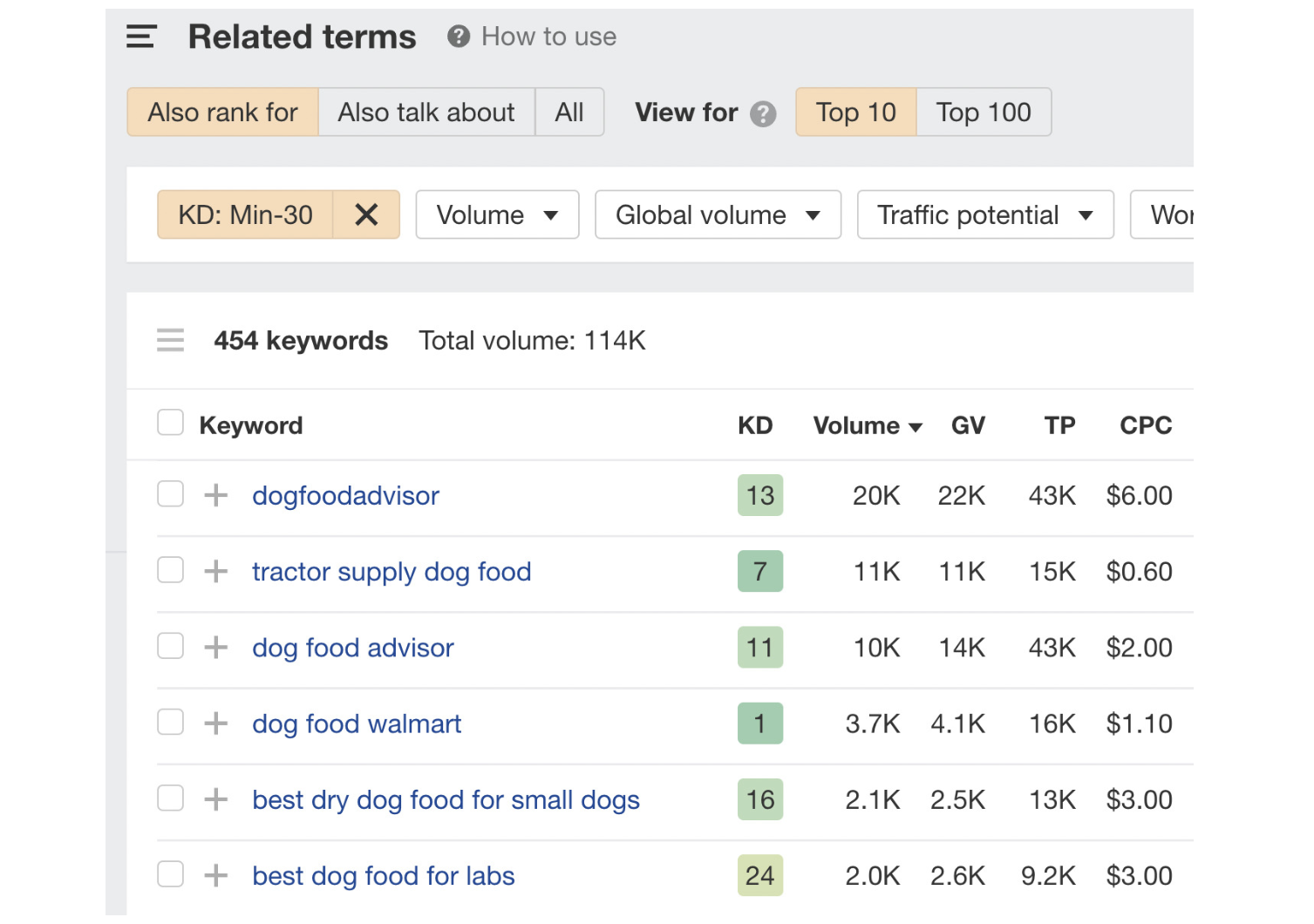
    Check out this screenshot.

    ecommerce blog keyword research

    Image source: Ahrefs

    Assuming you sell dog food, the keyword “dog food walmart” in the above screenshot shouldn’t be your concern at all.

    Focus on relevant keywords like “best dry dog food for small dogs.” 

    Step #3: Create a Content Strategy and Calendar

    After selecting your relevant keywords in Step 2 above, proceed to categorize them, as this will help you create an effective content strategy.

    To see this into action, let’s create a content strategy and calendar for a dog supplies store.

    1. Group Your Keywords

    Put all the keywords relating to dog food in one category and others relating to dog accessories in another category. 

    2. Create a Content Strategy

    Handpick the most relevant keywords from each category. For the dog food category, you can select a keyword like “dog food for small dogs.And for the dog accessories category, you can select “designer dog collars.” 

    The next step is to write detailed blog posts around these relevant keywords and publish them on your e-commerce blog. There’s no limit to how many relevant keywords you can write about. 

    For example, 

    • puppy food for sensitive stomach”, 
    • best food for little dogs
    • designer puppy collars

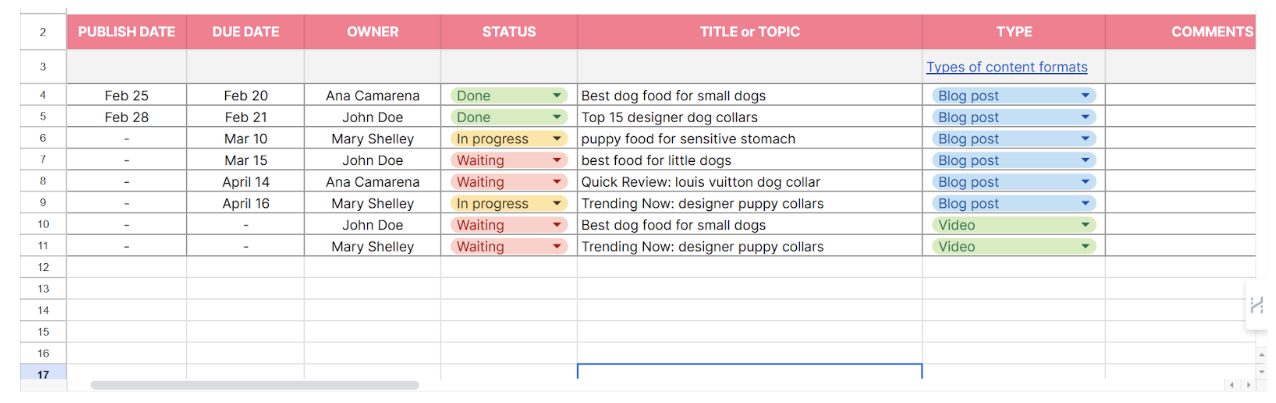
    The last part of your content strategy is to draft a posting schedule — known as a content calendar. This will determine the time and frequency you post on your e-commerce blog.

    See an example below:

    eCommerce blog calendar

    Step #4: Create an SEO Checklist

    Now, there are certain things you have to do to optimize each blog post for search engines. 

    These include:

    1. Add Alt-Text for every image in the blog post.
    2. Write a meta title and meta description for each blog post.
    3. Include target keywords and sprinkle other relevant keywords where possible.
    4. Use the right heading and subheading tags (H1 tag for the blog title, and H2, H3, or H4 tags for subheadings).
    5. Include external links to relevant research papers, studies, or authoritative websites like Wikipedia or Forbes.   

    Step #5: Promote on Social Media

    Even if you are waiting for search engines to rank your blog posts, you should still promote them on social media.

    Fun fact: Social media provides a wide audience reach and builds more trust, which makes Google rank you easily. 

    So whenever you publish new content on your blog, remember to talk about it on Instagram, Facebook, Twitter (X), TikTok, and other social media platforms.

    You can also convert your blog content into digestible newsletters and send them to your customers’ emails regularly. However, remember to include a link in each newsletter that points back to the full blog post on your website.

    Useful Tips for Successful eCommerce Blogging

    It’s possible to blog without getting any results. And this is a reality many eCommerce brands face.

    However, you can avoid such mistakes by taking note of the following. 

    Do More of These Things:

    • Remember to offer value before attempting to sell your products.
    • Tailor your content to the needs of your audience. If you sell pet accessories, don’t blog about hair styling for women. 
    • Take time to educate your audience about your products and services. Don’t always assume your audience knows everything about your products.

    Avoid Doing These Things:

    • Posting inconsistently at random times. This can push your customers to competitors that post consistently.
    • Publishing hard-to-read blog posts with too much industry jargon. No one wants to read something they can’t pronounce.
    • Posting irrelevant content. If you notice your customers don’t like a specific type of content, stop posting it.

    Final Thoughts

    If your eCommerce brand still lacks a blog, you’re doing your brand a great injustice. 

    Creating a blog for your eCommerce brand is the “surest” way to make more people notice your brand, trust you, and buy from you. Don’t delay any longer. The earlier you start, the faster you’ll start seeing results.

    And if you seek professional help, reach out to us at Inscribe. We’ll help you drive more customers with your eCommerce blog. We’ve generated over $10 million for our clients and we can get results for you as well. Book a call here to get things started.