Category: Content Writing

  • How to Use an eCommerce Blog to Drive More Customers

    How to Use an eCommerce Blog to Drive More Customers

    Building a successful eCommerce brand from the ground up is no small feat.

    You need a good product and a functional online store. And if you’re lucky enough, find a good company to handle shipping without disappointments.

    However, after all that work comes another challenge — expanding visibility to reach more customers. 

    That’s where an eCommerce blog can help you out.

    This article explains everything about creating a blog for your e-commerce brand, and how you can drive customers with it. So let’s dive in. 

    Having an eCommerce Blog: Is It Necessary?

    A blog is a section on your website where you publish quality content to educate your audience and build trust. 

    It’s a platform for sharing product comparisons, expert opinion posts, and comprehensive guides on how to use your products. And the good thing about having a blog is that — the content attracts organic traffic from search engines like Google.

    Here’s all the good stuff you can gain from having a blog for your eCommerce brand:

    1. More Revenue

    The more people visit your e-commerce website, the higher your chances of getting more sales.

    When you constantly publish quality content on your blog, Google shows your website to more people. And when that happens, your website will attract more visitors and sales, which ultimately increases your revenue.

    2. Added Value At No Cost

    Blogging is an easy way to add more value to your customers — at almost zero cost.

    You can leverage your e-commerce blog to publish:

    • in-depth product reviews
    • helpful guides that address common complaints
    • and product comparison articles to educate your audience

    Such content can convince your target audience to become paying customers.

    3. Become an Authority

    Your blog is an excellent platform to showcase your expertise on subject matters around what you sell. It’s a perfect place to give your expert opinion on trending topics about your products. 

    So, if you see any trending topic you want to blog about, don’t hesitate.

    Driving Customers With an eCommerce Blog: 5 Key Steps

    Now that we’ve discussed what you stand to gain from an eCommerce blog, let’s dive into the how.

    Step #1: Add a Blog Section to Your Website

    Check the backend of your current e-commerce website and find the option to add a blog. 

    The steps vary from platform to platform, but most e-commerce platforms have a straightforward guide for adding a blog section

    If you are contemplating good e-commerce platforms with seamless blogging functionalities, check out Shopify, WooCommerce, Magento, BigCommerce, or 3DCart.

    Regardless of your e-commerce platform, each blog post must have a title, short description, and main content. We’ll discuss this in more detail at step 4 (SEO checklist).

    Step #2: Conduct Keyword Research

    This critical step helps you know the type of blog content to create.

    A good way to begin your SEO keyword research is by analyzing the top competitors ranking for the products you sell. For example, if you sell pet accessories, go to Google and punch in a critical keyword like “buy pet accessories.” 

    You will see something like this:

    Scan through the Google search results page to see stores already ranking for that keyword. Input the URL of these websites into tools like Ahrefs, Semrush, or other SEO tools.

    By doing this, you’ll identify the organic keywords that make your competitors rank high on Google. However, ensure you only pick the keywords relevant to your products. 

    Check out this screenshot.
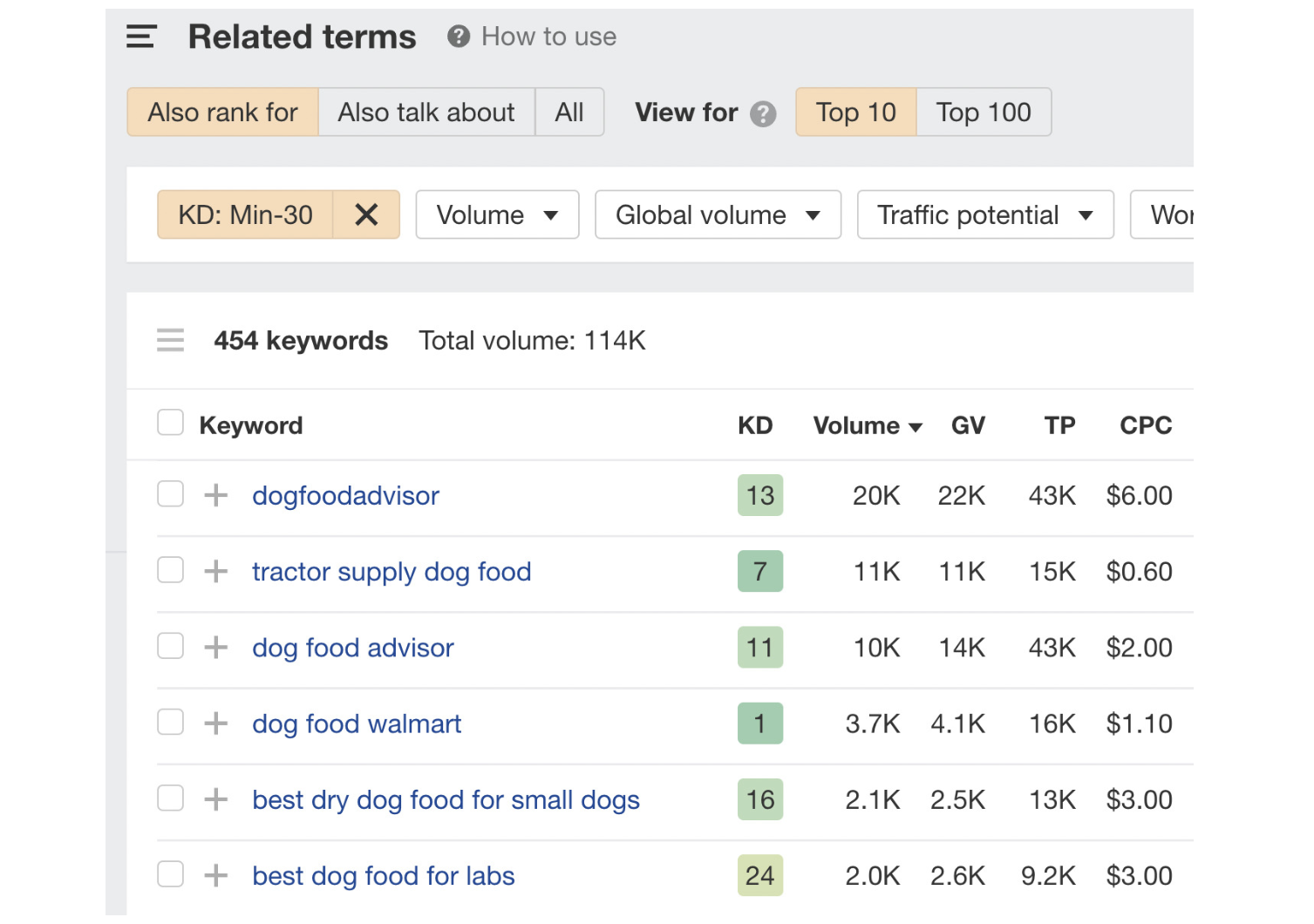
    ecommerce blog keyword research

    Image source: Ahrefs

    Assuming you sell dog food, the keyword “dog food walmart” in the above screenshot shouldn’t be your concern at all.

    Focus on relevant keywords like “best dry dog food for small dogs.” 

    Step #3: Create a Content Strategy and Calendar

    After selecting your relevant keywords in Step 2 above, proceed to categorize them, as this will help you create an effective content strategy.

    To see this into action, let’s create a content strategy and calendar for a dog supplies store.

    1. Group Your Keywords

    Put all the keywords relating to dog food in one category and others relating to dog accessories in another category. 

    2. Create a Content Strategy

    Handpick the most relevant keywords from each category. For the dog food category, you can select a keyword like “dog food for small dogs.And for the dog accessories category, you can select “designer dog collars.” 

    The next step is to write detailed blog posts around these relevant keywords and publish them on your e-commerce blog. There’s no limit to how many relevant keywords you can write about. 

    For example, 

    • puppy food for sensitive stomach”, 
    • best food for little dogs
    • designer puppy collars

    The last part of your content strategy is to draft a posting schedule — known as a content calendar. This will determine the time and frequency you post on your e-commerce blog.

    See an example below:
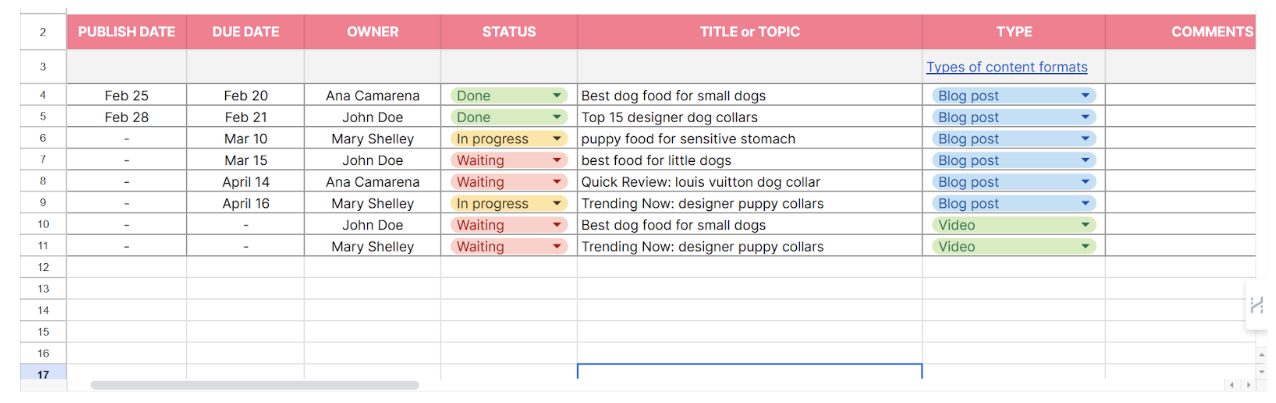
    eCommerce blog calendar

    Step #4: Create an SEO Checklist

    Now, there are certain things you have to do to optimize each blog post for search engines. 

    These include:

    1. Add Alt-Text for every image in the blog post.
    2. Write a meta title and meta description for each blog post.
    3. Include target keywords and sprinkle other relevant keywords where possible.
    4. Use the right heading and subheading tags (H1 tag for the blog title, and H2, H3, or H4 tags for subheadings).
    5. Include external links to relevant research papers, studies, or authoritative websites like Wikipedia or Forbes.   

    Step #5: Promote on Social Media

    Even if you are waiting for search engines to rank your blog posts, you should still promote them on social media.

    Fun fact: Social media provides a wide audience reach and builds more trust, which makes Google rank you easily. 

    So whenever you publish new content on your blog, remember to talk about it on Instagram, Facebook, Twitter (X), TikTok, and other social media platforms.

    You can also convert your blog content into digestible newsletters and send them to your customers’ emails regularly. However, remember to include a link in each newsletter that points back to the full blog post on your website.

    Useful Tips for Successful eCommerce Blogging

    It’s possible to blog without getting any results. And this is a reality many eCommerce brands face.

    However, you can avoid such mistakes by taking note of the following. 

    Do More of These Things:

    • Remember to offer value before attempting to sell your products.
    • Tailor your content to the needs of your audience. If you sell pet accessories, don’t blog about hair styling for women. 
    • Take time to educate your audience about your products and services. Don’t always assume your audience knows everything about your products.

    Avoid Doing These Things:

    • Posting inconsistently at random times. This can push your customers to competitors that post consistently.
    • Publishing hard-to-read blog posts with too much industry jargon. No one wants to read something they can’t pronounce.
    • Posting irrelevant content. If you notice your customers don’t like a specific type of content, stop posting it.

    Final Thoughts

    If your eCommerce brand still lacks a blog, you’re doing your brand a great injustice. 

    Creating a blog for your eCommerce brand is the “surest” way to make more people notice your brand, trust you, and buy from you. Don’t delay any longer. The earlier you start, the faster you’ll start seeing results.

    And if you seek professional help, reach out to us at Inscribe. We’ll help you drive more customers with your eCommerce blog. We’ve generated over $10 million for our clients and we can get results for you as well. Book a call here to get things started.

  • Content Strategy for SaaS Companies: Your Guide to Customer Acquisition

    Content Strategy for SaaS Companies: Your Guide to Customer Acquisition

    The SaaS industry is tough. It’s cold. And only the strongest products become profitable.

    However, having a great SaaS product is not enough to drive massive revenue. Tailored content marketing is the most sustainable way to do so. 

    But the hard truth is… 

    No SaaS company can succeed in content marketing without a solid content strategy. 

    A content strategy is what allows you to target your ideal audience. It guides how your content will be created and distributed to drive organic traffic and achieve your revenue goals. 

    So, how do you craft a winning content strategy for your SaaS company?

    You’ll find out in this guide. 

    SaaS Content Strategy: What Does It Mean?

    Content Strategy can mean different things, because “content” exists in several forms.

    However, for the purpose of this guide, I’ll focus on written content. The type of content that gets you on page 1 of Google — and still gets you customers.

    Like the GPS for your content – a content strategy guides where your content should go, how to get there, and ensures it doesn’t get lost in the jungle of other “content” out there.

    You get the picture? 👀

    Now that we’re clear on what a content strategy means, let’s get into all the details. How can you create a content strategy that brings you customers from the largest search engine in the world?

    Content Strategy for SaaS Companies: A Step-By-Step Guide

    Follow these simple steps to create a solid content strategy for your SaaS.

    Step #1: Laying the Foundation — Know Your Audience

    It may sound cliche, but it’s the truth.

    Quick story here…

    The other day, I was on an onboarding call with a client.

    He’s creating a product to help students better understand what they’re taught at school, without getting a fancy home teacher or having to attend extra lessons. The product is hands on and practical, unlike the existing rigid educational system in his country.

    I’m like…who’s your target audience? He goes…the students of course.

    All too many times, many people think their target audience is inherently the person their product or service is for.

    What do I mean?

    If you sell flowers, your target audience isn’t automatically “women.” It’s men too. It’s event decorators, wedding planners, anyone who could possibly need flowers, and anyone who could possibly get flowers for those who need them.

    You feel me?

    You have to think as far as possible, because the farther you think, the easier it is to pull your entire target audience from Google. Because your content will be able to target/speak to each audience.

    Step #2: Understand the Search Intent of Your Audience

    Your audience will most likely fall into these 3 categories.

    1. Unaware Audience — doesn’t know you exist or you can help them.
    2. Semi-Aware Audience — knows you kinda exist, but isn’t convinced you’re the best.
    3. Aware Audience — knows you exist, knows there are other people, but believes you’re the best. This is the audience that’ll give you money. However, an Aware Audience can also be sub-categorized into problem-aware and solution-aware. (more on that later).

    Now…

    There are 4 reasons why your audience will search for your SaaS product or service, and it’ll show up on Google.

    • Informational intent
    • Commercial Intent
    • Transactional Intent
    • Navigational intent

    Creating content around every one of these “intents” is directly proportional to how your audience finds you.

    Step #3: Keyword Research

    Wanna throw shots in the dark? Skip this part.

    But if you’re like me, and you prefer to always go in prepared, read this section carefully.

    Keywords fall into 2 major categories:

    • Branded Keywords
    • Non-Branded Keywords

    Branded keywords are keywords with your “brand names” in them.

    These keywords are often used by your aware audience – with navigational intent.

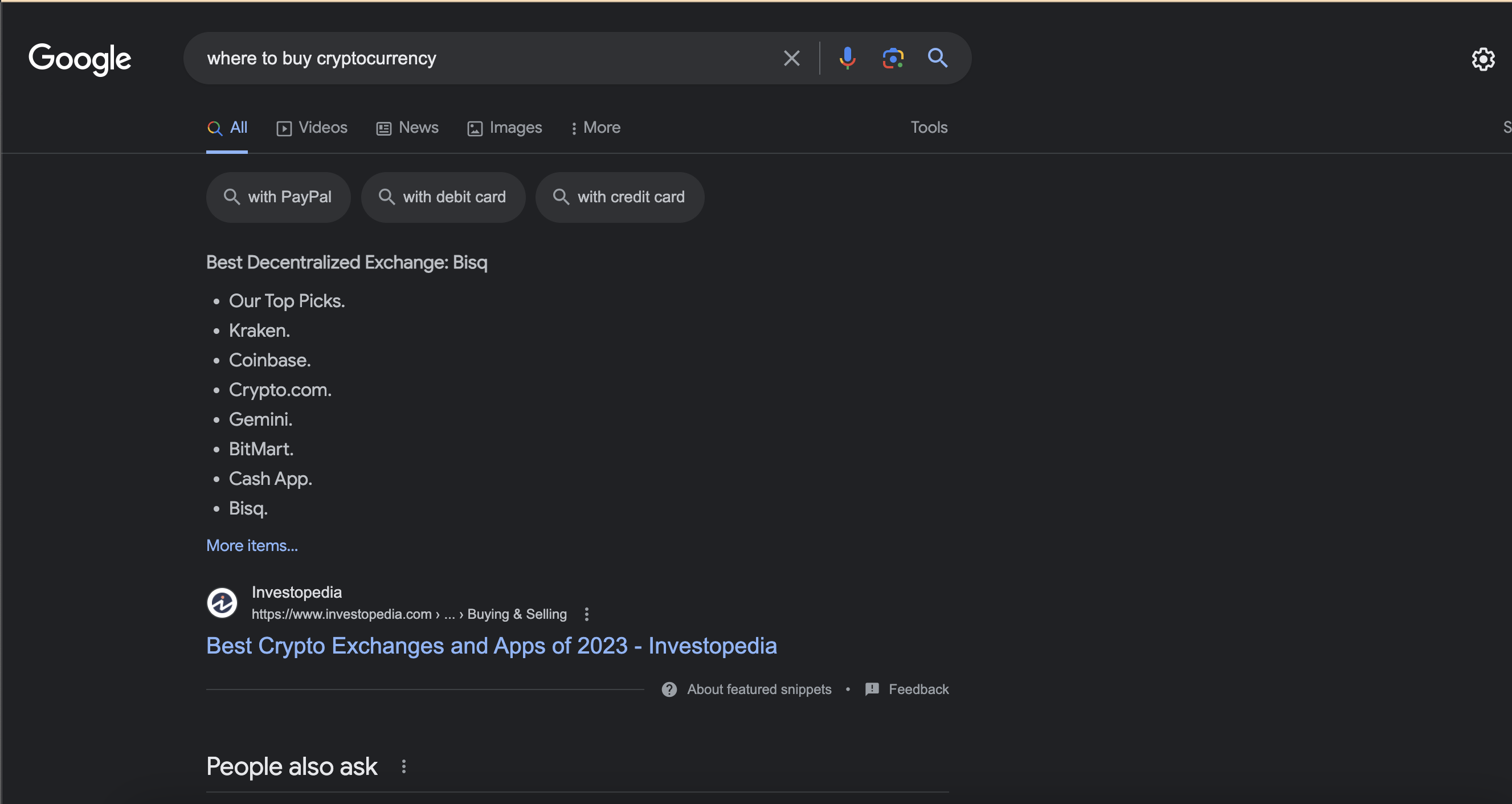
    For example, typing “Binance” into the search engine will most likely bring up Binance’s website. These people know Binance exists, they just need help “navigating” to where / what they wanna check out on Binance.

    content strategy for saas comapnies

    On the flip side, non-branded keywords don’t have your “brand name” in it.

    However, they’re keywords still used to find brands in your industry. For example, let’s use “non-branded” keywords like; “top cryptocurrency company” and “where to buy cryptocurrency” to find Binance.

    You get the idea?

    Content Strategy for SaaS Companies

    Now, to get a hold of these keywords, you need to do keyword research

    You’ll need a keyword research tool like SEMrush, Ahrefs, Screaming Frog, or Moz. These tools gather real-time information from search engines. 

    You can do keyword research with these tools — in two ways. I’ll be using SEMrush as my preferred tool.

    Method 1: Domain Overview

    The first way is to enter your domain URL and put it in the “domain overview” section of SEMrush.

    content strategy for SaaS Companies

    When you do this, you’ll get a list of keywords people usually use to find your website.

    Be prepared though, it’s often a long list. The keywords can be up to a million or more, or less, depending on your niche/industry.

    However, this method is not the most accurate because people can also find your website without using keywords directly relating to your business.

    For example, we did an audit for a Saas brand a while back, and their domain name is a synonym for chicken.

    And no, they don’t sell chicken. They sell software for recruiting, training, and hiring top talent. We discovered that a large percentage of their organic traffic was from people looking to buy chicken, not talent training software.

    However, you can still use this method — only if you sift the keywords in sync with your SaaS — from the ones that aren’t.

    Method 2: Keyword Overview

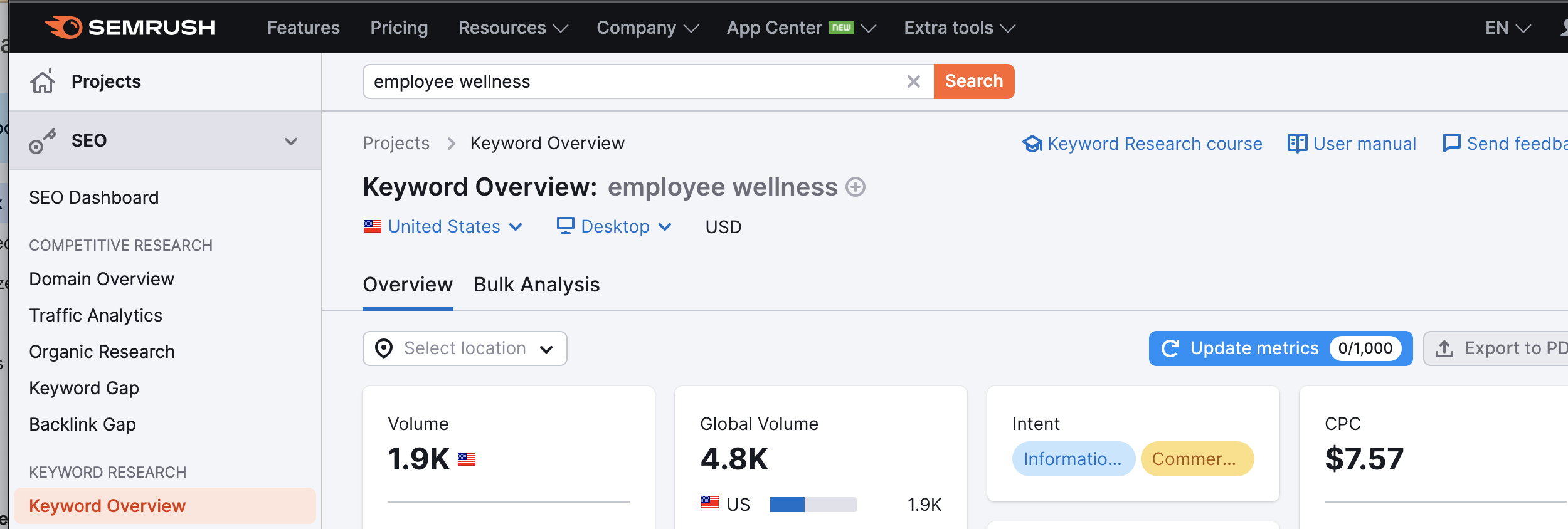
    The second way is to input the main keyword of your product or service into the “keyword overview” section of the SEMrush tool.

    Now, let’s assume we’re doing keyword research for an HR tool. In this case, one of our main keywords is “employee wellness.”

    Content Strategy for SaaS Companies


    Step #4: Categorize Your Keywords

    Now that you’ve discovered these keywords, let’s get cooking.

    You have to categorize the keywords you’ve discovered (from your keyword tool) according to the audience you’re trying to target, and their intent as well.

    These keywords will guide your next step because you’ll categorize them for your content pillars (more on that later). You also want to prioritize the keywords with high volume and low keyword difficulty.

    Step #5: Create Your Content Pillar 

    For instance, let’s say you have a SaaS AI tool.

    During your keyword research, you discovered that the keyword; “AI-powered SaaS tools” is a trending keyword with high volume. You can create a content pillar that’ll include several article topics to target that keyword AI-powered SaaS tools.

    You feel me? 👀

    If you’ve gotten to this step, your content strategy is 99% done.

    That’s because your content pillars are the core strategy. Once you have all your content pillars, you’ll use them to create the content calendar or timetable — for how you want your articles to roll out.

    Step #6: Put Together Your Content Strategy

    This is the point where you tie everything together. Use all the information you’ve gathered from Steps 1 to 5 to create a content strategy for your SaaS.

    Keep in mind that your content strategy will include:

    • The type of content that will be created
    • When the content will be published

    Once you have your content strategy mapped out, expand it into a detailed content calendar.

    And you may be asking: What’s a content calendar?

    Well, it’s just a regular calendar listing the days of the month and the corresponding content to be published on each day. 

    Step #7: Define Your Content Distribution and Promotion Channels

    You don’t want to spend time creating great content that no one will see, do you?

    You want as many eyes as possible to engage with your content. This is the most important piece of the puzzle when creating a SaaS content strategy. 

    Some effective content distribution and promotion channels include:

    • The blog section of your company’s website
    • Social media pages
    • Webinars and virtual events
    • Online groups, communities, and forums (like Reddit)
    • Email list (good for newsletters and sales campaigns)

    Though your aim is to get Google and other search engines to crawl the content on your website, it is helpful to also promote the content on social media, public groups, and so on. This can help accelerate the process because popular content gets indexed quickly and ranked higher by search engines. 

    How To Measure the Success of a SaaS Content Strategy

    While there’s no one-formula-fits-all, some key metrics can help you understand if your content strategy is working or not. 

    Here are some of them:

    1. Reach

    Use Google Analytics to track how far your content has traveled. Check how many people have seen your content and if it’s reaching the right people.

    2. Conversions

    Check if you are getting more clicks, downloads, sign-ups, and purchases.

    3. Engagement

    Check how long people spend on your content, how many comments it gets, and how many times it’s shared. Use tools like Buzzsumo, Apester, and Google Analytics to dig out these records.

    4. Impact

    Measure your content’s impact by tracking social media mentions, shares, and external links earned. Tools like Brandwatch, Talkwalker, and Google Trends can be handy for tracking these metrics.

    Tracking all the above metrics will give you a clear picture of how your content strategy is performing. 

    If the results are positive, then you know your efforts are paying off.  And if otherwise, then it means your content strategy needs improvement.

    Final Thoughts on Content Strategy for SaaS Companies

    Well, well, well…

    If you’ve gotten here, let’s make a toast to you. You’re now in the 1% of people that know how to create a content strategy that drives customers from Google.

    With SaaS companies becoming increasingly similar in terms of features, content marketing is now a must-do for any brand looking to stand out. 

    I hope you make good use of this free guide.

    We follow these same steps to create a winning content strategy for our clients — and we’ve driven over $10,727,000 in revenue for these clients.

    If you’d like to have access to our Content Profit System that helps you drive new customers from Google, book a call with us.