Category: SaaS

  • Content Localization for SaaS Companies: How To Do It

    Content Localization for SaaS Companies: How To Do It

    Imagine this…

    Someone online recommends that you try out a hosting service called Opedia. The person told you about all the juicy stuff Opedia has to offer, and you’re pretty convinced.

    Now, you visit Opedia’s website to sign up, but you discover that the language used on the website is foreign. You don’t understand a thing.

    How painful would that be?

    Content localization helps to avoid such pain.

    If you’re a SaaS company, (or any company at all), content localization will ensure that your content fits other languages and cultures.

    But how?

    Well, that’s the main essence of this article. You’ll learn how to implement content localization for your SaaS company, and all the benefits you can enjoy from doing so.

    What Does Content Localization Mean for SaaS Companies?

    Content localization is the process of modifying every content of your SaaS business to fit different regions. This often involves adapting to the language, culture, and preferences of other target audiences.  

    Now, this process of “adapting” includes:

    • Adding multi-language support to the user interface of your software.
    • Mindful translation of everything on your company’s website into multiple languages.
    • Translating, converting, and customizing your marketing campaign materials to match the culture of your target audience. 

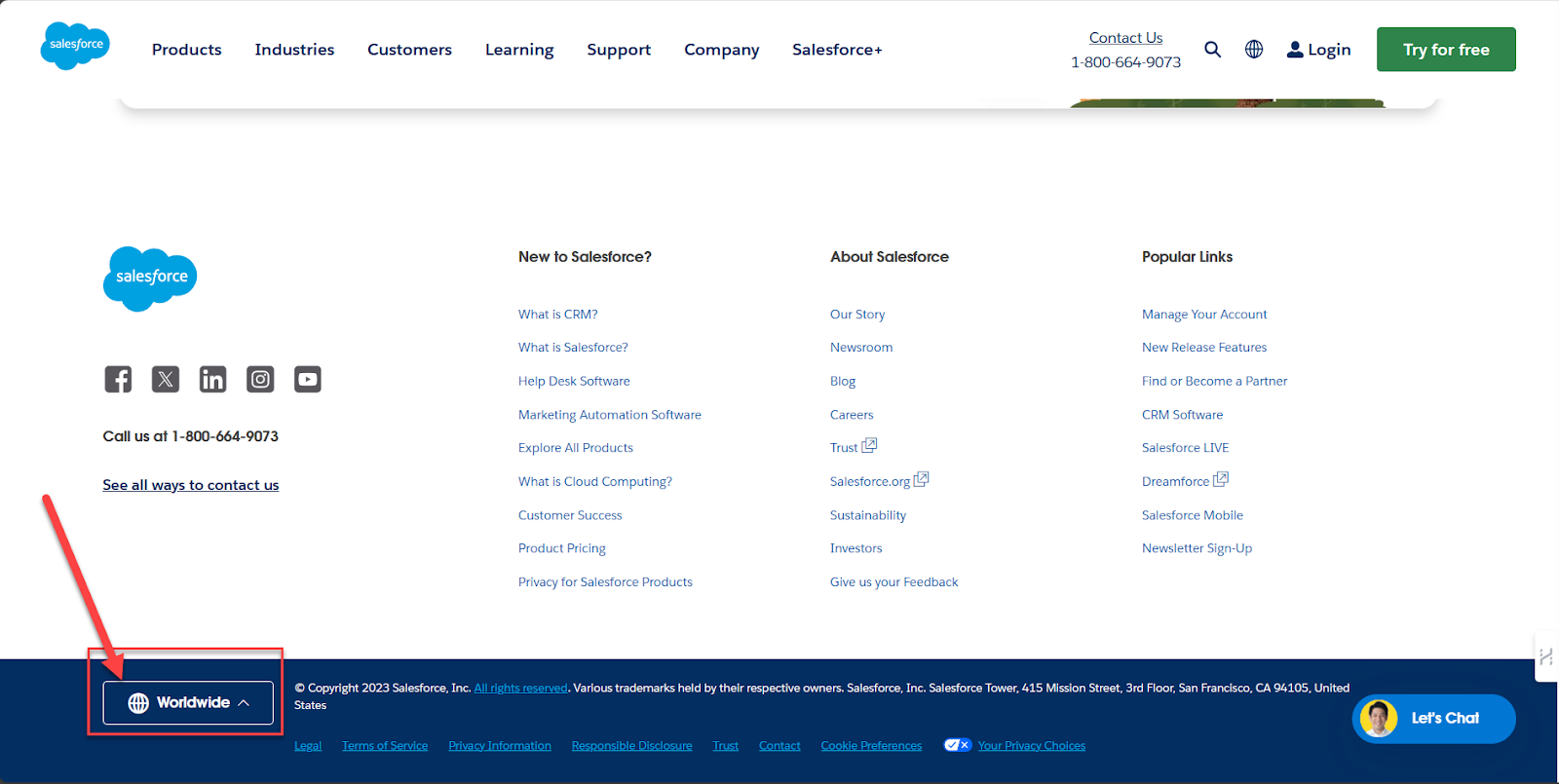
    The image below shows how Salesforce implements localization by providing a one-click region change button on its website.

    Default view:
    Content localization for SaaS


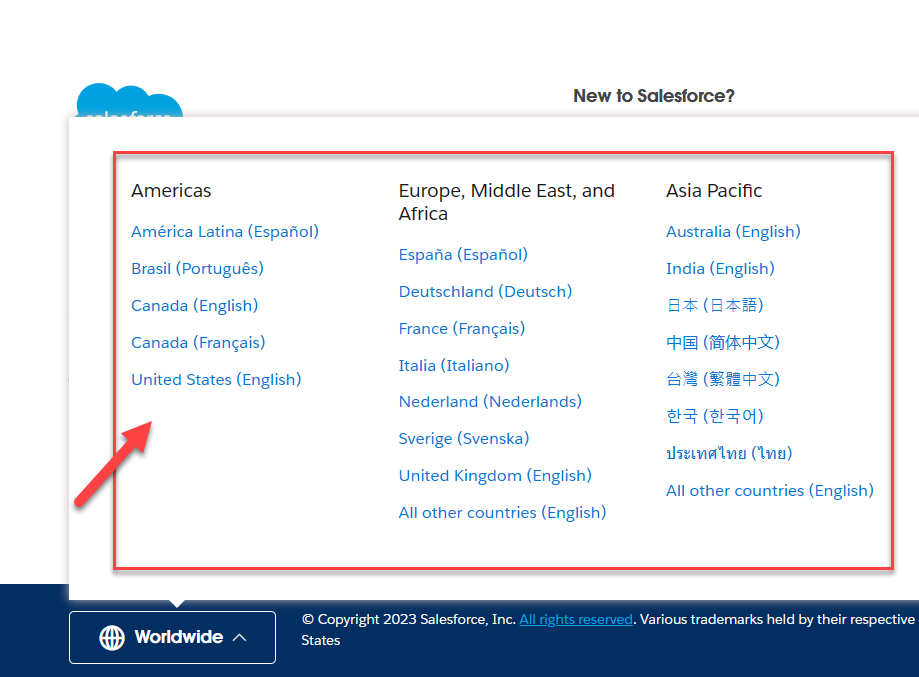
    When you click the button on Salesforce’s website, a list of regions and languages appears, as shown below.  
    Content localization for SaaS

    Immediately you switch to another region, the Salesforce website translates all the text and changes the overall view to localized content.

    Here’s what Salesforce’s homepage looks like for the United States (English):
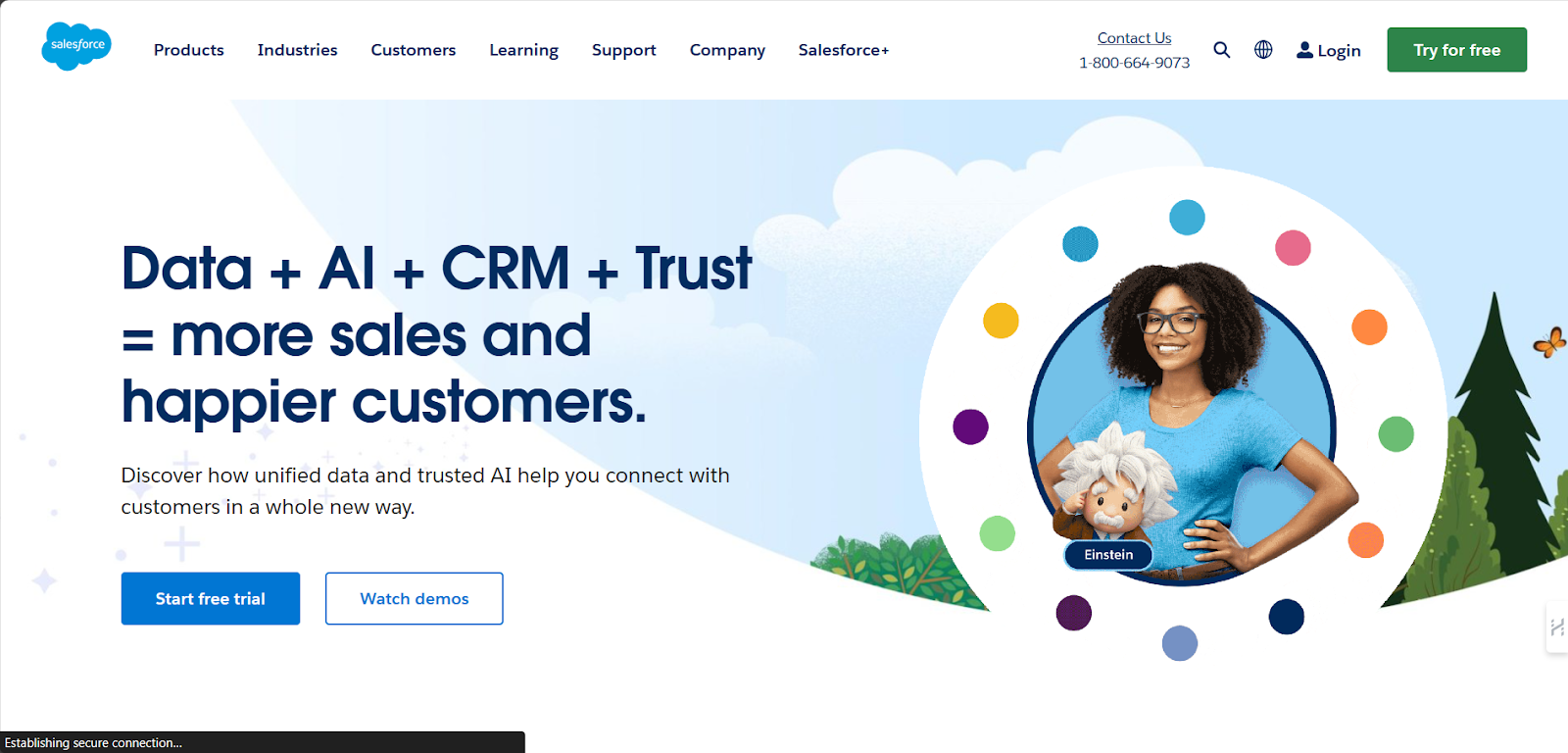
    Content localization for SaaS

    And here’s what you’ll see after switching to Deutschland (Deutsch):
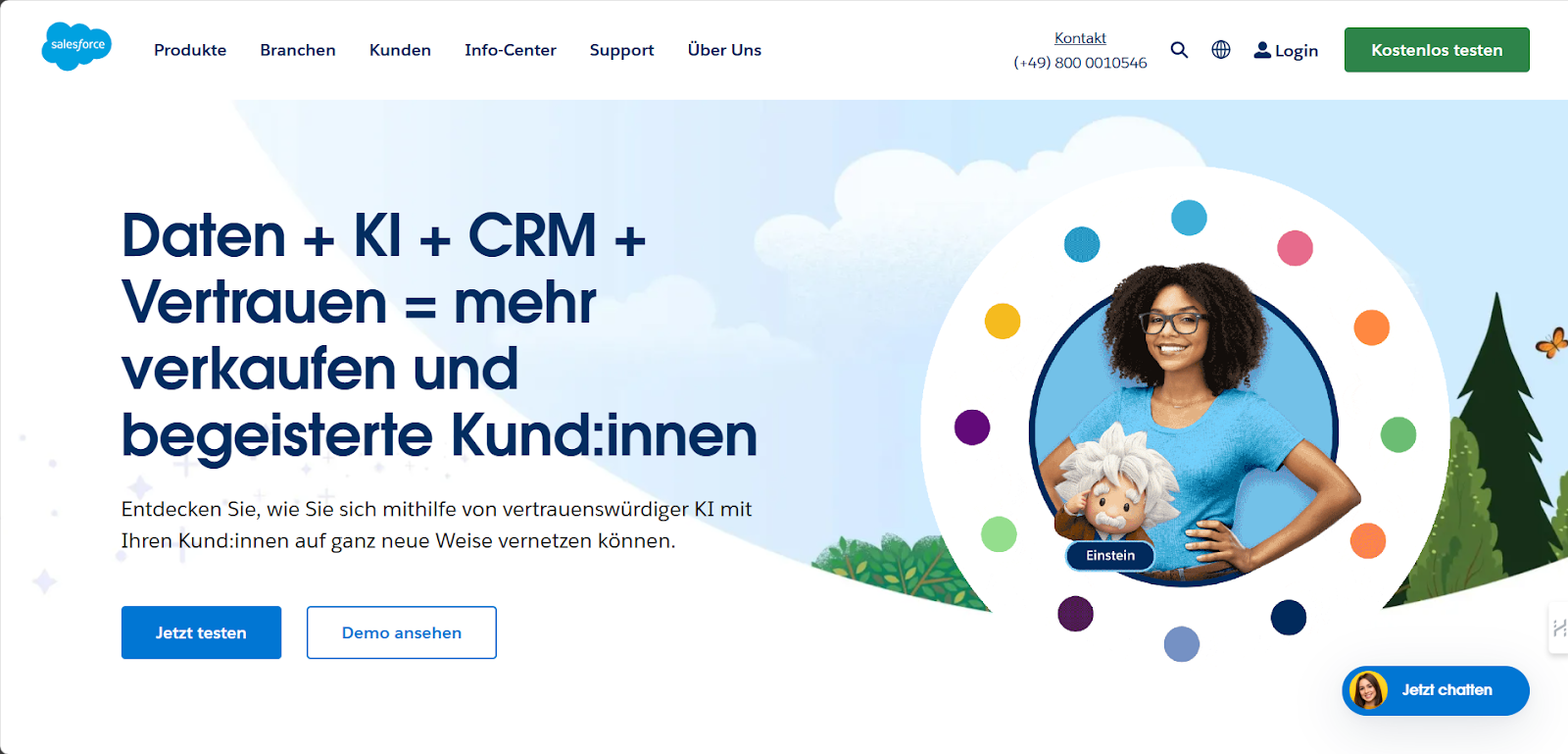
    Content localization for SaaS

    Can you see how smoothly the homepage content gets translated?

    You can do the same and even more for your SaaS company. Just follow the guide below.

    Step-By-Step Guide To Content Localization for SaaS Companies

    Hold on, there’s something you need to know first. 

    Before you can localize your SaaS content, you need to have a good content localization strategy. It’s nothing complicated; it’s only a strategy that defines how you adapt and tailor your content to meet the needs of your specific audience or market. 

    Here’s how to kickstart content localization for your SaaS company. 

    Step #1: Analyse Your Goals

    You must assess where you stand in the scheme of things before dashing ahead to localize your content. Analyze what exactly the company needs, and what it aims to accomplish with localization.

    Are you aiming to drive more traffic to your SaaS website, enhance customer satisfaction, or increase revenue? 

    Let your answers guide how you approach the localization of your business content.

    Step #2: Conduct Market Research

    Get deep into understanding your target audience and analyzing your competitors. Dig deeper into search engine results to see which competitor ranks higher in your target region.

    Also, go through the content on your website and check the ones that might require extra attention when localizing them. 

    An example of such content is your Terms and Conditions page. Double-check it to ensure the conditions written inside match your target market. If your terms and conditions differ based on location, be careful to emphasize that even in your localized content.

    Step #3: Explore Available Resources

    Take a closer look at your resources—budget, timeline, and team roles. Consider the overall business landscape and what stakeholders are expecting. 

    Such careful examination will help you prioritize content, select the appropriate localization services, and execute your final plan confidently.

    Step #4: Make Your Decisions

    Once you’ve done a robust analysis, your next focus should be deciding how things will go down. Identify the critical content to focus on and ensure you give special attention to specific parts of the user journey. 

    Decide on the following:

    • How often will you review and update the localized (final) content?
    • Do you want the localized versions to have additional information?
    • How can you remove bottlenecks to speed up the localization process?

    Whatever you decide on at this stage will determine your next line of action. 

    Step #5: Take Action

    Once you’ve done your analysis and concluded how you want things to go, the final step is to itemize the actions you’ll take. Here’s a good list of action plans you can include in your strategy:

    • Get your original content formatted properly in preparation for translation to another language.
    • Set up a team of expert translators and reviewers. (or hire an agency to translate and review for you)
    • Develop unique style guides, glossaries, and any other language asset that can speed up the localization process.
    • Set up the localization software to be used or have a localization expert set things up for you and carry you along the process
    • Deploy localized content to appropriate platforms and channels (website, app, or social media)

    Now, if you’re still trying to decide if localization is worth it, take a cue from these successful SaaS products with localized products.

    Top 3 SaaS Products That Are Localized

    Many big players in the SaaS industry understand the power of content localization and have been using it to their advantage. 

    Here are three solid examples of SaaS companies with localized SaaS products:

    1. Slack

    Slack is a team communication platform developed by Slack Technologies. 

    The cloud-based software has a well-defined content localization. It allows users to easily switch between different languages. It’s no wonder why Slack has become a popular choice for millions of users globally.

    As at the time of this blog post, Slack has an estimated 32.3 million daily active users.

    2. Canva

    Canva is a 100% online graphic design platform used for creating sleek images, presentations, logos, PDFs, Resumes, and even videos.

    The cloud-based software is available in 100+ languages, which explains its enormous user base in 190 countries worldwide. And based on Q4 data for 2023, Canva boasts a total of 135 million active monthly users

    3. Dropbox

    Dropbox is a popular file hosting service owned by the American company Dropbox, Inc., which has its headquarters in San Francisco, California, U.S.

    The Dropbox service mainly covers cloud storage, file synchronization, personal cloud, and client software. Dropbox’s localization strategies have made the SaaS software accessible to users in 22+ languages. 

    The company also provides localized customer support and frequently adapts its marketing campaigns to its target market. These efforts pay off, as Dropbox currently boasts over 700 million registered users worldwide.  


    Looking at these successful companies, it’s fair to say that content localization is worth it. But do you know the types of content you should localize?

    Types of SaaS Content to Consider for Localization

    From your software’s interface to your marketing campaigns, you should localize as much as you can. Here are some suggestions to help you:

    • Website Content

    Localize all the pages on your website, including landing pages, product descriptions, and customer testimonials. This ensures that visitors from different regions can easily understand your offerings.

    • User Interface (UI) and User Experience (UX)

    If applicable, localize the software’s user interface to cater to users in different regions. This includes buttons, menus, and other interactive elements. A seamless user experience will enhance the adoption of your SaaS software.

    • Knowledge Base and FAQs

    Localize your knowledge base articles and frequently asked questions. This is an opportunity to provide comprehensive support in the language and context relevant to your target market.

    • Marketing Materials

    Adapt marketing materials such as brochures, presentations, and sales pitches to resonate with your target audience’s cultural preferences.

    • Blogs and Articles

    Create content that addresses region-specific challenges, trends, and interests. This positions your company as knowledgeable about the local market.

    • Customer Success Stories and Case Studies

    Highlight success stories from clients in the targeted region. Such stories add a local touch and demonstrate the effectiveness of your SaaS solution in that market.

    • Email Campaigns

    If you run email marketing campaigns, tailor your messages to suit the cultural context of the target audience. This includes language, tone, and content.

    • Social Media Content

    Localize social media posts to align with different regions’ cultural norms and current events. That’s the best way to ensure your social presence is engaging and relevant.

    • Legal and Compliance Documents

    Ensure that legal documents, terms of service, and compliance-related content are localized to meet the legal requirements of specific regions.

    FAQs on Content Localization for SaaS Companies

    1. What Is SaaS Content Localization?

    Content localization for SaaS aims to make users feel like your product was created specifically for them. An effective way to achieve this goal is to tailor your content to the user’s cultural context.

    2. How Do I Create a Content Localization Strategy?

    Start by identifying the culture and language in your target regions. Conduct thorough research and understand what your target audience needs. Afterward, determine which content to localize and choose the right translation partners and tools.

    3. What Is Content Translation in SaaS?

    Content translation is the process of converting the primary language of a software-as-a-service (SaaS) product to meet the language, cultural, and functional requirements of specific target markets. This typically includes translating the content on the user interface, blogs, and ensuring compatibility with local regulations and standards.

    Conclusion

    Content localization helps you reach a global audience effectively. It’s a nuanced process that can propel your SaaS company above competitors when venturing into international markets.

    If you want to do things right, don’t look for shortcuts. You can start by following the steps we’ve highlighted in this article.

    Cheers.

  • Content Strategy for SaaS Companies: Your Guide to Customer Acquisition

    Content Strategy for SaaS Companies: Your Guide to Customer Acquisition

    The SaaS industry is tough. It’s cold. And only the strongest products become profitable.

    However, having a great SaaS product is not enough to drive massive revenue. Tailored content marketing is the most sustainable way to do so. 

    But the hard truth is… 

    No SaaS company can succeed in content marketing without a solid content strategy. 

    A content strategy is what allows you to target your ideal audience. It guides how your content will be created and distributed to drive organic traffic and achieve your revenue goals. 

    So, how do you craft a winning content strategy for your SaaS company?

    You’ll find out in this guide. 

    SaaS Content Strategy: What Does It Mean?

    Content Strategy can mean different things, because “content” exists in several forms.

    However, for the purpose of this guide, I’ll focus on written content. The type of content that gets you on page 1 of Google — and still gets you customers.

    Like the GPS for your content – a content strategy guides where your content should go, how to get there, and ensures it doesn’t get lost in the jungle of other “content” out there.

    You get the picture? 👀

    Now that we’re clear on what a content strategy means, let’s get into all the details. How can you create a content strategy that brings you customers from the largest search engine in the world?

    Content Strategy for SaaS Companies: A Step-By-Step Guide

    Follow these simple steps to create a solid content strategy for your SaaS.

    Step #1: Laying the Foundation — Know Your Audience

    It may sound cliche, but it’s the truth.

    Quick story here…

    The other day, I was on an onboarding call with a client.

    He’s creating a product to help students better understand what they’re taught at school, without getting a fancy home teacher or having to attend extra lessons. The product is hands on and practical, unlike the existing rigid educational system in his country.

    I’m like…who’s your target audience? He goes…the students of course.

    All too many times, many people think their target audience is inherently the person their product or service is for.

    What do I mean?

    If you sell flowers, your target audience isn’t automatically “women.” It’s men too. It’s event decorators, wedding planners, anyone who could possibly need flowers, and anyone who could possibly get flowers for those who need them.

    You feel me?

    You have to think as far as possible, because the farther you think, the easier it is to pull your entire target audience from Google. Because your content will be able to target/speak to each audience.

    Step #2: Understand the Search Intent of Your Audience

    Your audience will most likely fall into these 3 categories.

    1. Unaware Audience — doesn’t know you exist or you can help them.
    2. Semi-Aware Audience — knows you kinda exist, but isn’t convinced you’re the best.
    3. Aware Audience — knows you exist, knows there are other people, but believes you’re the best. This is the audience that’ll give you money. However, an Aware Audience can also be sub-categorized into problem-aware and solution-aware. (more on that later).

    Now…

    There are 4 reasons why your audience will search for your SaaS product or service, and it’ll show up on Google.

    • Informational intent
    • Commercial Intent
    • Transactional Intent
    • Navigational intent

    Creating content around every one of these “intents” is directly proportional to how your audience finds you.

    Step #3: Keyword Research

    Wanna throw shots in the dark? Skip this part.

    But if you’re like me, and you prefer to always go in prepared, read this section carefully.

    Keywords fall into 2 major categories:

    • Branded Keywords
    • Non-Branded Keywords

    Branded keywords are keywords with your “brand names” in them.

    These keywords are often used by your aware audience – with navigational intent.

    For example, typing “Binance” into the search engine will most likely bring up Binance’s website. These people know Binance exists, they just need help “navigating” to where / what they wanna check out on Binance.

    content strategy for saas comapnies

    On the flip side, non-branded keywords don’t have your “brand name” in it.

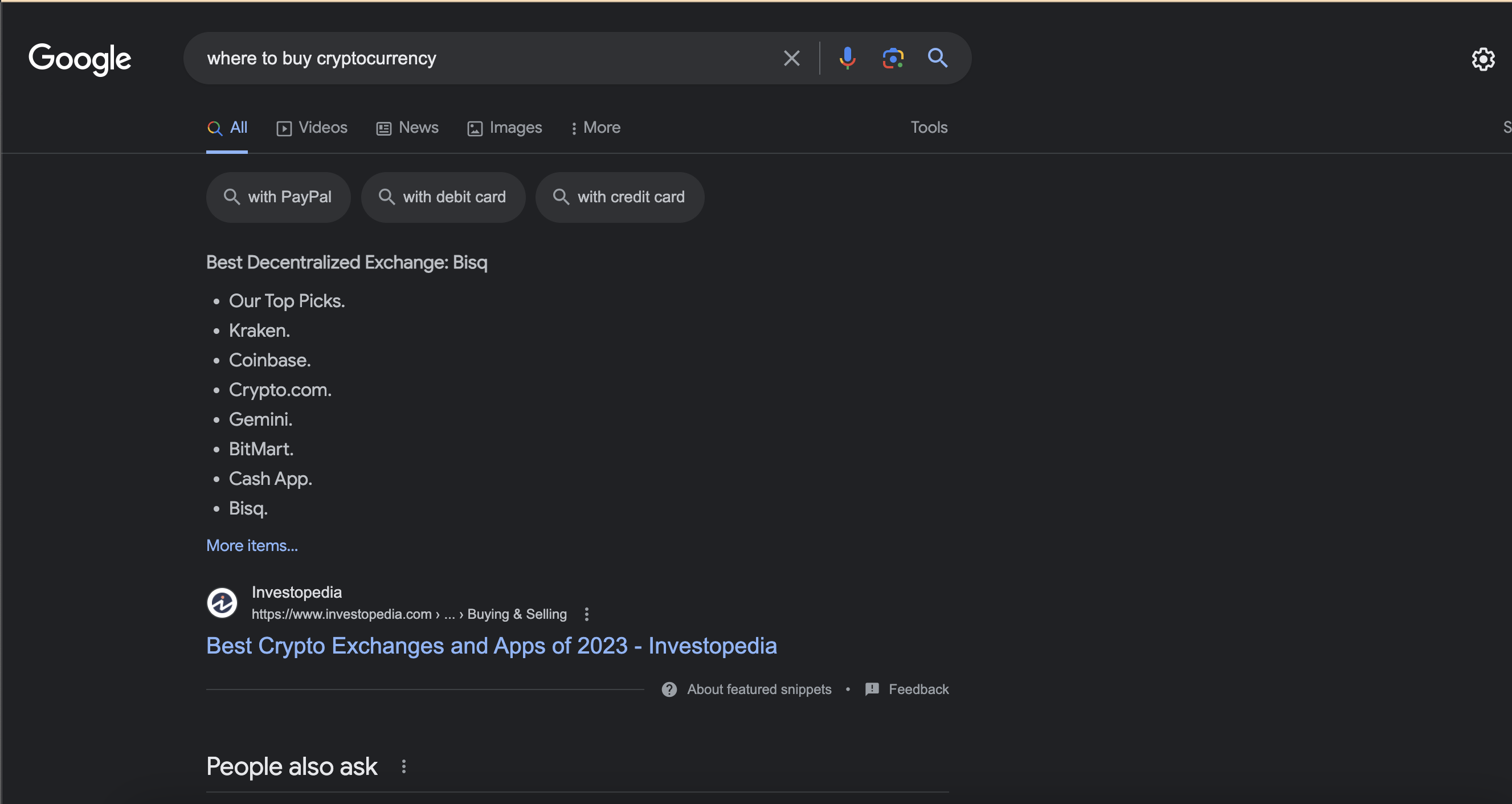
    However, they’re keywords still used to find brands in your industry. For example, let’s use “non-branded” keywords like; “top cryptocurrency company” and “where to buy cryptocurrency” to find Binance.

    You get the idea?

    Content Strategy for SaaS Companies

    Now, to get a hold of these keywords, you need to do keyword research

    You’ll need a keyword research tool like SEMrush, Ahrefs, Screaming Frog, or Moz. These tools gather real-time information from search engines. 

    You can do keyword research with these tools — in two ways. I’ll be using SEMrush as my preferred tool.

    Method 1: Domain Overview

    The first way is to enter your domain URL and put it in the “domain overview” section of SEMrush.

    content strategy for SaaS Companies

    When you do this, you’ll get a list of keywords people usually use to find your website.

    Be prepared though, it’s often a long list. The keywords can be up to a million or more, or less, depending on your niche/industry.

    However, this method is not the most accurate because people can also find your website without using keywords directly relating to your business.

    For example, we did an audit for a Saas brand a while back, and their domain name is a synonym for chicken.

    And no, they don’t sell chicken. They sell software for recruiting, training, and hiring top talent. We discovered that a large percentage of their organic traffic was from people looking to buy chicken, not talent training software.

    However, you can still use this method — only if you sift the keywords in sync with your SaaS — from the ones that aren’t.

    Method 2: Keyword Overview

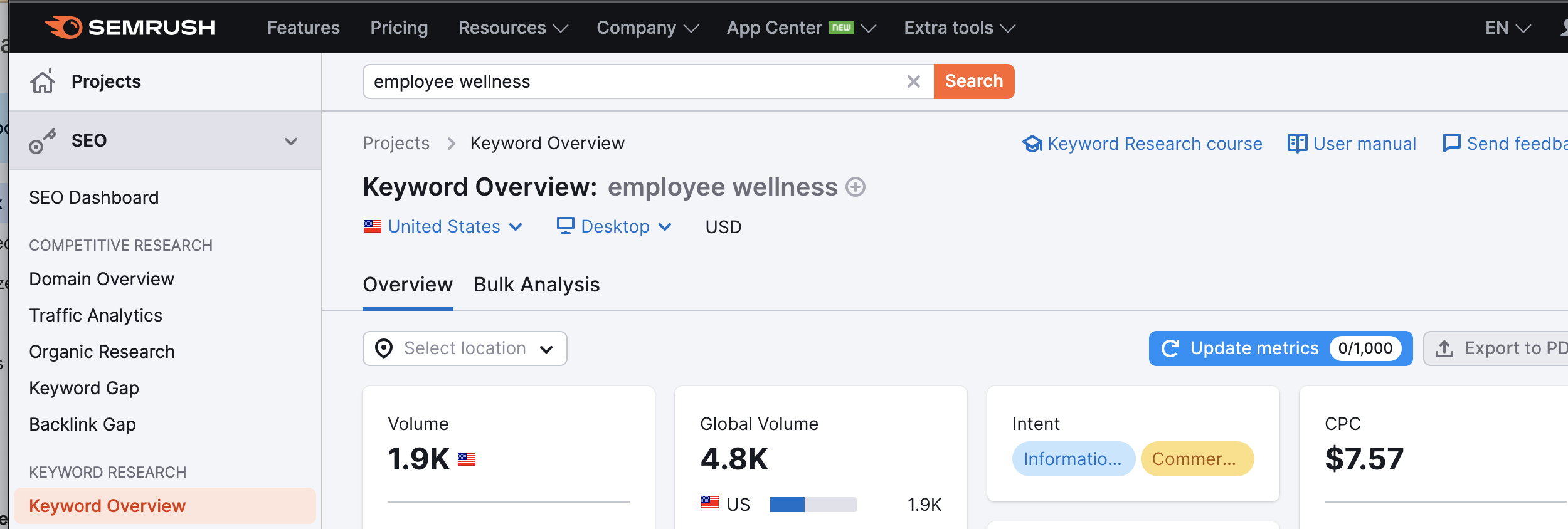
    The second way is to input the main keyword of your product or service into the “keyword overview” section of the SEMrush tool.

    Now, let’s assume we’re doing keyword research for an HR tool. In this case, one of our main keywords is “employee wellness.”

    Content Strategy for SaaS Companies


    Step #4: Categorize Your Keywords

    Now that you’ve discovered these keywords, let’s get cooking.

    You have to categorize the keywords you’ve discovered (from your keyword tool) according to the audience you’re trying to target, and their intent as well.

    These keywords will guide your next step because you’ll categorize them for your content pillars (more on that later). You also want to prioritize the keywords with high volume and low keyword difficulty.

    Step #5: Create Your Content Pillar 

    For instance, let’s say you have a SaaS AI tool.

    During your keyword research, you discovered that the keyword; “AI-powered SaaS tools” is a trending keyword with high volume. You can create a content pillar that’ll include several article topics to target that keyword AI-powered SaaS tools.

    You feel me? 👀

    If you’ve gotten to this step, your content strategy is 99% done.

    That’s because your content pillars are the core strategy. Once you have all your content pillars, you’ll use them to create the content calendar or timetable — for how you want your articles to roll out.

    Step #6: Put Together Your Content Strategy

    This is the point where you tie everything together. Use all the information you’ve gathered from Steps 1 to 5 to create a content strategy for your SaaS.

    Keep in mind that your content strategy will include:

    • The type of content that will be created
    • When the content will be published

    Once you have your content strategy mapped out, expand it into a detailed content calendar.

    And you may be asking: What’s a content calendar?

    Well, it’s just a regular calendar listing the days of the month and the corresponding content to be published on each day. 

    Step #7: Define Your Content Distribution and Promotion Channels

    You don’t want to spend time creating great content that no one will see, do you?

    You want as many eyes as possible to engage with your content. This is the most important piece of the puzzle when creating a SaaS content strategy. 

    Some effective content distribution and promotion channels include:

    • The blog section of your company’s website
    • Social media pages
    • Webinars and virtual events
    • Online groups, communities, and forums (like Reddit)
    • Email list (good for newsletters and sales campaigns)

    Though your aim is to get Google and other search engines to crawl the content on your website, it is helpful to also promote the content on social media, public groups, and so on. This can help accelerate the process because popular content gets indexed quickly and ranked higher by search engines. 

    How To Measure the Success of a SaaS Content Strategy

    While there’s no one-formula-fits-all, some key metrics can help you understand if your content strategy is working or not. 

    Here are some of them:

    1. Reach

    Use Google Analytics to track how far your content has traveled. Check how many people have seen your content and if it’s reaching the right people.

    2. Conversions

    Check if you are getting more clicks, downloads, sign-ups, and purchases.

    3. Engagement

    Check how long people spend on your content, how many comments it gets, and how many times it’s shared. Use tools like Buzzsumo, Apester, and Google Analytics to dig out these records.

    4. Impact

    Measure your content’s impact by tracking social media mentions, shares, and external links earned. Tools like Brandwatch, Talkwalker, and Google Trends can be handy for tracking these metrics.

    Tracking all the above metrics will give you a clear picture of how your content strategy is performing. 

    If the results are positive, then you know your efforts are paying off.  And if otherwise, then it means your content strategy needs improvement.

    Final Thoughts on Content Strategy for SaaS Companies

    Well, well, well…

    If you’ve gotten here, let’s make a toast to you. You’re now in the 1% of people that know how to create a content strategy that drives customers from Google.

    With SaaS companies becoming increasingly similar in terms of features, content marketing is now a must-do for any brand looking to stand out. 

    I hope you make good use of this free guide.

    We follow these same steps to create a winning content strategy for our clients — and we’ve driven over $10,727,000 in revenue for these clients.

    If you’d like to have access to our Content Profit System that helps you drive new customers from Google, book a call with us.

  • Blogging Guide For Saas Companies: Everything You Need To Know

    Blogging Guide For Saas Companies: Everything You Need To Know

    Maintaining an active blog is the cheapest way to drive paid signups and increase revenue for your SaaS product. 

    How?

    Google – the largest search engine in the world with over 8 billion searches per day, can drive organic traffic to your website – when you post valuable content on your blog.

    Yes. Google can do all the heavy lifting for you – when you’ve laid a solid foundation to attract organic traffic.

    But how, still?

    You’ll want to read this guide.

    In this explicit blogging guide for SaaS companies, we’ll discuss everything you need to know about SaaS blogging, and how it can help you drive organic traffic. 

    But First…What Is a SaaS Blog?

    A SaaS blog is a section of your website aimed at educating your target audience about your product.

    Now, “educating” involves several things. 

    Generally, it involves giving valuable information about the products and services offered by your SaaS company. All of which can include:

    • Industry news
    • How-to guides
    • Product reviews
    • Trending SaaS topics
    • How to use your product
    • Tips and tricks to using your product
    • Addressing the pain points of your audience
    • Product reviews & comparison with other competitors
    • How your audience can overcome their pain points with your product

    …and many more. 

    Step-by-Step Blogging Guide for SaaS Companies

    Now that we’ve established what a SaaS blog is, let’s dive into how you can start blogging.

    Step #1: Lay the Foundation 

    The first step is to understand your target audience on a deeper level. Do detailed research to uncover details like gender, age range, pain points, and interests.

    You should also gauge the awareness level of your audience.

    Awareness levels range from being fully aware, semi-aware, or unaware of your products or services. Also, decipher their search intent, whether they only need information or want to make a purchase immediately.

    Tools like SEMrush, Surfer SEO and Ahrefs can help you with this research. 

    Step #2: Create a Content Strategy for Your SaaS Blog

    The content on your SaaS blog must be strategic and well thought-out. 

    Your blog content must align with SEO best practices if you want customers to find your products through Google.

    Question is, how do you create content that actually ranks on Google and drives customers to you?

    The answer lies in having a targeted content strategy.

    A content strategy is a game plan that helps you dance to the tune of Google – to easily attract customers to your business from Google.

    Like the GPS for your content – a Content Strategy guides where your content should go, how to get there, and ensures it doesn’t get lost in the jungle of other “content” out there.

    Here’s how to create a content strategy 

    • Action Point 1: Keyword Research

    Keyword research is the process of uncovering keywords that your target audience uses to discover products or services in your industry. You’ll need tools like SEMRush, Surfer SEO, Ahrefs, or Answer the Public to dig out powerful keywords and topics people search for in the SaaS industry. 

    A Screenshot Showing Keyword Research

    A Screenshot Showing Keyword Research

    Keywords fall into two major categories:

    1. Branded Keywords

    Branded keywords have your “brand names” in them. These keywords are often used by people who know about your business. They just need help navigating to your website or a particular section of your website. For example, typing “Binance” into the search engine will most likely bring up Binance’s website. 

    2. Non-branded Keywords

    On the flip side, non-branded keywords don’t have your “brand name” in it. However, they’re keywords still used to find brands in your industry. For example, “non-branded” keywords like; “top cryptocurrency company” and “where to buy cryptocurrency” can find crypto companies like Coinbase, Binance, Kraken, etc. 

    Do you get the picture?

    Now, non-branded keywords rake in the most customers.

    Why?

    Because these people don’t even know you exist. They just need a solution to something– or need information on something. So they run to Google. 

    Once you do detailed keyword research, you’ll discover these keywords, and they’ll guide you in creating your blog content. 

    • Action Point 2: Categorize Your Keywords

    Now that you’ve discovered the keywords your target audience uses, it’s time to categorize the keywords accordingly.

    You have to categorize the keywords you’ve discovered (from your keyword tool) according to the audience you’re trying to target, and their search intent as well.

    These keywords will guide your next step because they’ll determine your content pillars and every other content you publish.

    That’s your content strategy right there. 

    Step #3: Create a Content Pillar

    A content pillar includes article topics built around major keywords.

    For instance, let’s say you have a SaaS AI tool. During your keyword research, you discovered that the keyword; “AI-powered SaaS tools” is a trending keyword with high volume. You can create a content pillar that’ll include several article topics to target that keyword AI-powered SaaS tools.

    This may include:

    • Top 10 AI-powered SaaS tools
    • How to use AI-powered SaaS tools
    • Pros and Cons of using AI-powered SaaS tools

    …and other relevant titles.  

    You get the picture?

    In a different scenario, you may discover your target audience keeps asking search engines how to explore the features of your software or other questions generally relating to your SaaS. In such a situation, you’ll build another content pillar around these keywords, answering all of these questions in detail. 

    Step #4: Start Writing Content

    Now that you know the audience you want to target, you’ve done keyword research, and you have your content pillar in hand, it’s time to start writing content.

    How to Create Engaging SaaS Blog Content

    Now, it’s not enough to just start writing articles. 

    Your content must be interesting and engaging. This is important so you can wield the attention of your audience from start to finish.  Here are some tips to help you create more engaging content. 

    1. Use Storytelling

    Till the ends of time, people will always love stories. Most people will sit through a lengthy fiction or real-life story if it’s interesting and inspiring. 

    So, how can you make use of this fact?

    Incorporate stories in your blog posts. Find clever ways to convey your points using case studies, anecdotes, or cajoling sentences.

    2. Include Eyes Candy

    Make your content visually appealing.

    As much as people enjoy reading stories, they also love videos, pictures, and other engaging visuals. Try GIFs, infographics, or real-time images

    3. Don’t Be Boring

    No one wants to read boring content. Doesn’t matter if your product is about gamma-equation-waves-in-the-sphere of Pluto’s orbit, or the most boring concept ever. Find a way to make it interesting – because that’s the only way anyone will read and digest your content. 

    Even in the most “professional” space ever, a little joke or humor in your blogs won’t hurt. Find a way to spice things up.

    Blog Post Ideas for a SaaS Blog

    Here are some creative ways to write content with target keywords in mind.  

    • How-to Guides

    You can create blog posts providing step-by-step instructions on how to use your software. Such guides inform your customers on the features and capacities of your product or service. Here’s a screenshot of a typical how-to guide:

    Screenshot showing a “How-to” guide. Image source: Zapier

    • Tips & Tricks posts

    Use this type of blog post to share information that users may not know. Share unconventional ways of using your software. 

    Here’s a classic example of a tips & tricks post:

    Types of SaaS blogs

    Screenshot showing a “Tips & Tricks” post. Image source: Hubspot

    • Case Studies & Customer Testimonials

    Show how existing customers use your SaaS in real-time. Include case studies and customer testimonials with metrics if available. This will make prospects more drawn to your SaaS and convinced that your product is of immense value. 

    See an example here:

    Screenshot showing a Case Study. Image source: Zapier

    • Thought Leadership Posts

    Share expert opinions within your particular industry or field. Ensure your posts provide unique perspectives, insights, and forward-thinking ideas. 

    Here’s an example:

    Screenshot showing a “Thought Leadership” post. Image source: Neil Patel

    Feature Spotlights and Reviews

    Share the best features, benefits, and real-world applications of your SaaS. Use detailed examples or case studies to show how your SaaS solves major pain points.

    See the screenshot below. 

    SaaS Blogging

    Screenshot showing a “Feature Spotlight” post. Image source: ClickUp

    Why SaaS Companies Should Be Blogging

    The most important reason ever — is to acquire more paying customers.

    No one will find your SaaS online if Google and other search engines don’t know you exist. But if that doesn’t convince you, here are other reasons you need to be actively blogging. 

    • Free Organic Traffic

    Active blogging is the easiest way to make search engines drive organic traffic to your SaaS website.

    An interesting benchmark report by Animalz revealed that 83% of popular SaaS blogs get almost all their traffic from organic search. This report further showed that SaaS companies that are actively blogging – generate 67% more leads every month. 

    Picture this: You recently launched a SaaS company that offers cloud storage for mobile phone users. You have a functional website that runs perfectly. Question is, how would you make Google and other search engines recommend your website to thousands, possibly millions – of people searching for “mobile phone cloud storage” (or related keywords) every day?

    The answer is simple – active blogging.

    When you do proper SEO-rich blogging, thousands of people searching for related keywords in your industry will find your website on a regular basis. 

    • You’ll Save Money on Ads

    Now, let’s flip the switch.

    If you were to take the route of paid ads, you’d have to pay for every single visit to your website, even those who don’t convert. That’s not only expensive in the long run, it is clearly unsustainable for most businesses. 

    With SEO-optimized blog content, you’ll have new visitors landing on your page daily. In turn, you’ll get free leads at zero cost.

    Question is, do you want more leads?

    Pro Tip: Using Social Media for SaaS Blogging

    Social media can prove powerful when combined with blogging. It’s where you can get more eyeballs on your blog.  

    You can break down your lengthy blog posts into small digestible chunks and post them on social media for a wider reach. 

    Here are some helpful tips for distributing your blog content on social media: 

    1. Use Attractive Visuals: Use GIFs, infographics, videos, and images to make things interesting and boost engagement on your social media.

    2. Use Hashtags: Relevant hashtags can bring you more visibility and drive traffic to your blog. If you’re posting about AI-powered tools, you can hashtag #productivity #AI tools. So when people search for these keywords, you have a chance to rank on the social media platform as well. 

    3. Automate Posts: You don’t need to manually post on each of your company’s social media accounts every time. Automation tools like Buffer and Hootsuite can help you simultaneously distribute content across all your social media channels.

    FAQs

    1. How Do I Write a Blog For SaaS?

    The best way to write for a SaaS blog is by addressing pain points and conveying a high level of expertise while doing so. Take time to demonstrate expertise in your product category by writing on high-quality topics and thoroughly addressing critical points.

    2. What Is SaaS SEO?

    SaaS SEO is the process of optimizing a SaaS product and its website content to rank higher in search results. This involves including relevant keywords in the content, as well as optimizing the website’s structure and design. Other critical strategies include keyword research, site audits, on-page optimization, creating high-quality content, and building backlinks from high-authority websites.

    3. What Is B2B SaaS Writing?

    Business-to-business (B2B) SaaS writing involves writing content specifically tailored for businesses offering software solutions as a service. This type of writing communicates SaaS products’ value, features, and benefits to a business audience. B2B SaaS writing can include (but is not limited to) content formats like blog posts, whitepapers, case studies, product documentation, and marketing pieces. 


    A Summary on SaaS Blogging 

    After reading this explicit blogging guide for SaaS companies, you may feel a bit overwhelmed by what you have to do.

    Relaxxxxxxx. 

    It’s not difficult. Take a deep breath and start setting up your SaaS blog step by step. 

    However, you can also partner with a reputable content marketing agency like Inscribe Agency to take the stress off you.

    Remember, successful SaaS companies maintain an active blog. Don’t be left out. Stay ahead of your competition and start pushing out blog content today. 

    Goodluck!